
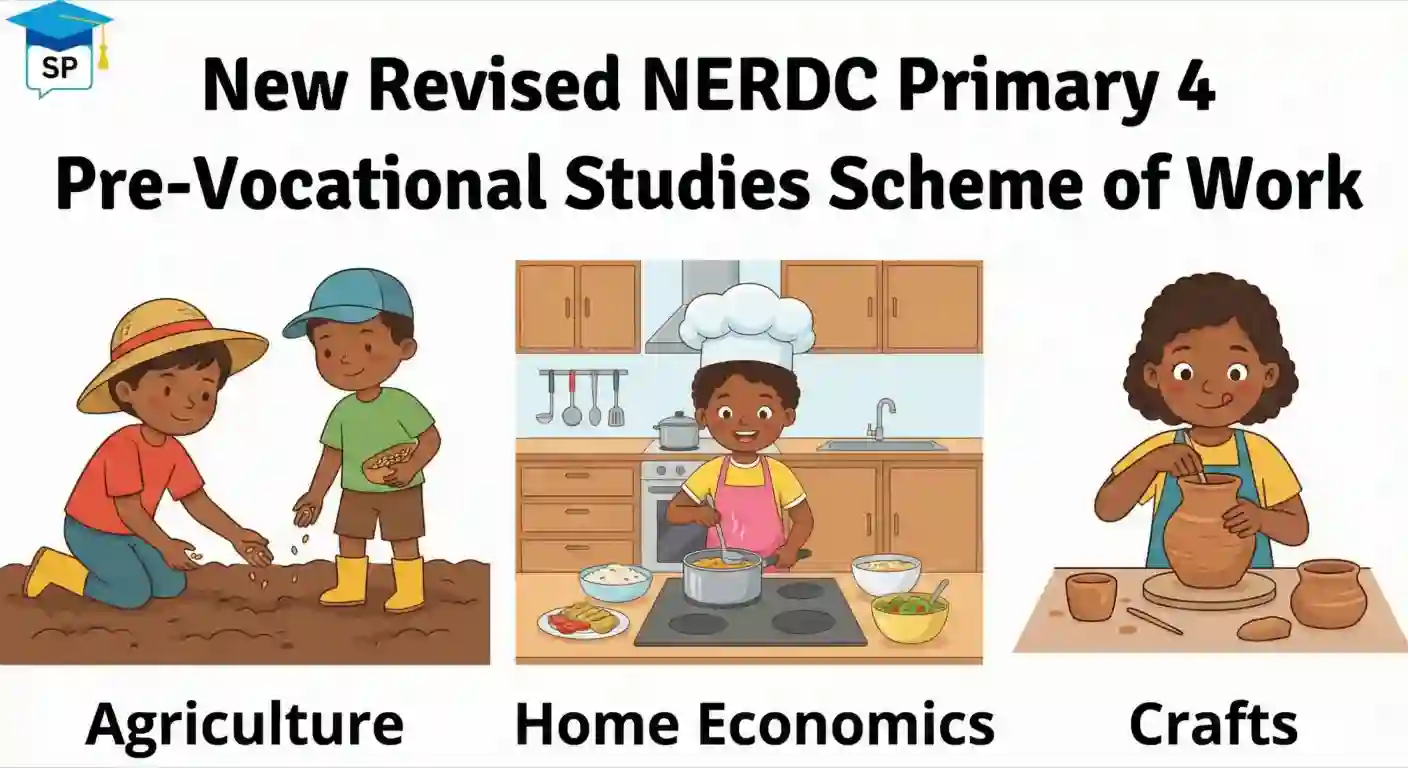
New Revised NERDC Primary 4 Pre-Vocational Studies Scheme of Work
Week 1: Types and Care of Personal Clothing
1. Content: Types of personal clothing: shirts, blouses, skirts, pants, trousers, vests, scarves, wrappers, pyjamas, nightgown, footwears, caps etc.
2. Performance Objectives: Identify types of personal clothing.
3. Learning Activities:
i. Teacher Activities: The teacher displays a variety of personal clothing/items, the teacher produces a chart of variety of personal clothing articles.
ii. Learning Activities: The learners identify and name different kinds of clothing.
4. Teaching and Learning Resources: Different articles of clothing including shirts, trousers, skirts, and footwear. Display a chart showing various personal clothing articles to help pupils recognize and categorize different clothing types they encounter daily.
Week 2: Types and Care of Personal Clothing
1. Content: Reasons for wearing clothing: protection, beauty, identification/status, for special occasions e.g. party.
2. Performance Objectives: Mention reasons for wearing clothes and footwears.
3. Learning Activities:
i. Teacher Activities: The teacher discusses the reasons for wearing clothes, the teacher provides pictures of people of various professions in uniforms.
ii. Learning Activities: The learners state reasons for wearing clothes, the learners identify different people from the pictures according to their type of clothing.
4. Teaching and Learning Resources: Pictures of professionals in uniforms such as nurses, police officers, and fire service personnel. Include a chart showing different clothing types to demonstrate how clothing serves multiple purposes beyond basic covering.
Week 3: Types and Care of Personal Clothing
1. Content: Laundry agents, tools and equipment: agents e.g. water, soap/detergents; tools e.g. basin, bath; equipment e.g. iron, washing machine; reasons for caring for clothing.
2. Performance Objectives: State the reasons for caring for clothing, mention the steps in care of clothing.
3. Learning Activities:
i. Teacher Activities: The teacher discusses care of clothing articles.
ii. Learning Activities: The learners state the materials needed for taking care of clothes.
4. Teaching and Learning Resources: Laundry agents like soap, water, and detergent. Include laundry tools such as irons, basins, and pegs to show pupils the complete range of materials needed for proper clothing care.
Week 4: Types and Care of Personal Clothing
1. Content: Steps in care of clothes: washing, ironing, airing, storing; demonstrate care for shoes/bags e.g. polishing.
2. Performance Objectives: Mention the steps in care of clothing, demonstrate how to care for shoes/bags e.g. polishing, launder personal cloth.
3. Learning Activities:
i. Teacher Activities: The teacher demonstrates steps for caring of personal clothing, the teacher gives board summary.
ii. Learning Activities: The learners practice how to hang and store their clothes, the learners demonstrate how to launder clothes, the learners copy the board summary.
4. Teaching and Learning Resources: Line or rope for hanging clothes, pegs, iron, and personal clothing items. These practical materials enable pupils to learn proper clothing care techniques through hands-on demonstration and practice.
Week 5: Food: Classification and Functions of Food
1. Content: Meaning of food; reasons for eating food (e.g., growth, energy, repair).
2. Performance Objectives: Define food, state reasons for eating food.
3. Learning Activities:
i. Teacher Activities: The teacher explains meaning and reasons for eating food, the teacher displays samples of foods.
ii. Learning Activities: The learners participate in discussion, the learners state reasons for eating food.
4. Teaching and Learning Resources: Food samples such as rice, beans, and fruits. Include charts showing different food classes to help pupils understand what constitutes food and why the body needs various food types.
Week 6: Food: Classification and Functions of Food
1. Content: Six classes of food: carbohydrates, proteins, fats and oils, vitamins, minerals, water.
2. Performance Objectives: List the six classes of food and their uses, mention classes of food nutrient.
3. Learning Activities:
i. Teacher Activities: The teacher groups foods into classes, the teacher explains classes.
ii. Learning Activities: The learners classify displayed foods into groups.
4. Teaching and Learning Resources: Food samples representing each class such as bread for carbohydrates, beans for proteins, and fruits for vitamins. Use a food pyramid chart to show pupils how different food classes contribute to balanced nutrition.
Week 7: Mid-Term Break
Mid-term break offers rest before the final term push. Administer a mid-term test covering topics from Week 1 to Week 6, including clothing care and food classification. This assessment guides teachers on areas requiring additional attention.
Week 8: Food: Classification and Functions of Food
1. Content: Nutrients and their functions: carbohydrates for energy, proteins for growth and repair, fats for insulation, vitamins for immunity, minerals for bone health, water for hydration.
2. Performance Objectives: Explain the functions of each food nutrient.
3. Learning Activities:
i. Teacher Activities: The teacher explains functions of each nutrient.
ii. Learning Activities: The learners state functions of specific nutrients.
4. Teaching and Learning Resources: Charts showing nutrient functions and pictures of healthy meals. These visual aids help pupils connect specific foods to their nutritional benefits and understand why balanced eating matters for health.
Week 9: Food: Classification and Functions of Food
1. Content: Deficiency diseases of nutrients: e.g., kwashiorkor (protein), rickets (vitamin D), scurvy (vitamin C), goiter (iodine).
2. Performance Objectives: Mention deficiency diseases of nutrients.
3. Learning Activities:
i. Teacher Activities: The teacher discusses deficiency diseases with examples, the teacher gives board summary.
ii. Learning Activities: The learners identify deficiency diseases, the learners copy board summary.
4. Teaching and Learning Resources: Pictures showing deficiency diseases and charts listing nutrient deficiencies. These materials help pupils understand the consequences of poor nutrition and the importance of eating varied, balanced meals.
Week 10: Food: Classification and Functions of Food
1. Content: Review of classification, functions, and deficiencies.
2. Performance Objectives: Explain overall classification and functions, mention deficiencies.
3. Learning Activities:
i. Teacher Activities: The teacher reviews all content, the teacher facilitates group activities on meal planning.
ii. Learning Activities: The learners participate in grouping foods and discussing balanced diets.
4. Teaching and Learning Resources: All food samples and charts from previous weeks. Use these materials to conduct comprehensive review activities that consolidate pupils’ understanding of food classification, nutrients, and deficiency diseases.
Week 11: Revision
Revision week reviews all third term content from Week 1 to Week 10. Cover clothing types, care procedures, food classes, nutrient functions, and deficiency diseases. Use practical activities and group discussions to prepare pupils thoroughly for the examination.
Week 12: Examination
Examination week tests pupils on clothing identification and care, food classification, nutrient functions, and deficiency diseases. Include both theoretical questions and practical tasks like classifying foods or demonstrating clothing care procedures to assess complete understanding.
Week 13: Examination, Marking & Vacation
Finish all examinations, mark papers, and record final scores. Provide pupils with comprehensive feedback on their yearly performance in Pre-Vocational Studies. Once all administrative duties are complete, the academic year vacation begins.
Frequently Asked Questions and Answers About Primary 4 Pre-Vocational Studies Scheme of Work
1. What does the Primary 4 Pre-Vocational Studies scheme of work cover?
The scheme of work covers three main areas: agriculture, home economics, and personal care skills. First term focuses on agriculture including soil types, farm tools, and crop growing. Second term teaches home economics with emphasis on personal grooming and cosmetic use. Third term covers clothing care and food nutrition with practical life applications.
2. How can teachers use this scheme of work effectively in the classroom?
Teachers should follow the weekly structure and use the suggested teaching resources for each lesson. Start each topic with the listed teacher activities like demonstrations or displays. Engage pupils through the student activities that encourage participation and hands-on learning. The performance objectives help teachers measure what pupils achieve each week.
3. What teaching resources are needed for this scheme of work?
Basic resources include farm tools, soil samples, body care items, clothing articles, and food samples. Teachers also need charts, pictures, and baby dolls for demonstrations. Most resources are locally available or can be improvised using materials from the school environment or pupils’ homes.
4. Why is pre-vocational studies important for Primary 4 pupils?
Pre-vocational studies teach practical skills that pupils use in daily life. They learn about farming, personal hygiene, nutrition, and clothing care. These topics build self-sufficiency and prepare pupils for responsible living. The knowledge connects school learning to real-world applications in their homes and communities.
5. How are the topics organized across the three terms?
First term covers agriculture fundamentals and farm practices. Second term focuses on home economics and personal grooming. Third term addresses clothing care and food nutrition. Each term has 13 weeks including mid-term break, revision, and examination periods.
6. What are the performance objectives in this scheme of work?
Performance objectives describe what pupils should achieve after each lesson. They include actions like define, identify, demonstrate, list, and explain. These objectives guide teachers on expected learning outcomes and help assess whether pupils have mastered the content.
7. How does the scheme of work support different learning styles?
The scheme of work includes varied activities for different learners. Visual learners benefit from charts and displays. Kinesthetic learners engage through practical demonstrations and hands-on experiments. Discussion activities support auditory learners. This variety ensures all pupils can grasp the concepts effectively.
8. What happens during revision and examination weeks?
Week 11 is for revision where teachers review all topics covered in the term. Week 12 is for examination testing pupils on the term’s content. Week 13 concludes examinations, includes marking, recording results, and then vacation begins. This structure allows proper assessment and feedback.
9. Can teachers modify the scheme of work for their school context?
Yes, teachers can adapt activities based on available resources while maintaining core objectives. If certain tools or materials are unavailable, use pictures, charts, or alternative local materials. The key is ensuring pupils achieve the stated performance objectives even with modified approaches.
10. How does this scheme of work align with NERDC curriculum standards?
This scheme of work follows NERDC guidelines for primary pre-vocational education. It covers approved topics, includes competencies and values, and structures content according to curriculum standards. The weekly breakdown and performance objectives match NERDC expectations for Primary 4 pupils.
Source: New Revised NERDC Primary 4 Pre-Vocational Studies Curriculum