
New Revised NERDC Primary 4 Pre-Vocational Studies Scheme of Work
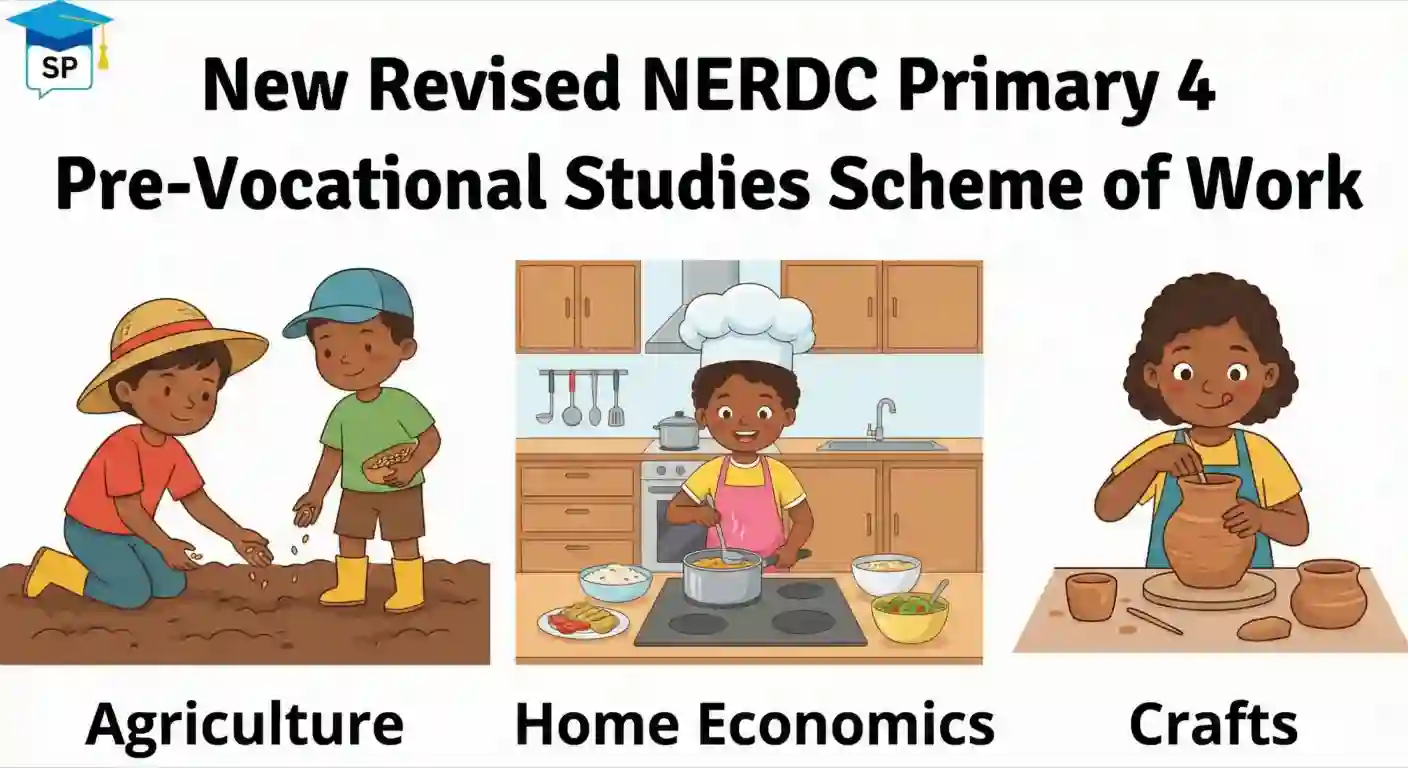
The New Revised NERDC Primary 4 Pre-Vocational Studies Scheme of Work provides a structured guide for teaching practical life skills to young learners. This scheme of work covers three major areas: agriculture, home economics, and personal care. Each term focuses on building knowledge and skills that prepare pupils for real-world applications.
The scheme of work spans three academic terms with carefully planned weekly lessons. Teachers get clear objectives, learning activities, and resource lists for each topic. The content progresses from basic concepts to more complex skills throughout the year.
Agriculture lessons teach pupils about farming, soil management, and farm tools. Home economics sections cover personal grooming and body care. The third term introduces clothing care and food nutrition. All topics connect to help pupils develop practical competencies.
Each week includes specific teacher and student activities that make learning interactive. The performance objectives guide teachers on what pupils should achieve. This approach ensures consistent delivery across different classrooms.
The scheme of work follows NERDC curriculum standards for primary education. It balances theoretical knowledge with hands-on practice. Teachers can adapt the activities based on available resources while maintaining the core learning outcomes.
Table of Contents
Why the Primary 4 Pre-Vocational Studies Scheme of Work Matters
Teachers need this scheme of work to deliver structured and effective pre-vocational lessons. It removes guesswork by providing clear weekly plans with measurable objectives. The organized format helps teachers prepare lessons faster and teach with confidence.
The scheme of work improves learning by connecting classroom theory to daily life. Pupils learn skills they can use at home and in their communities. When teachers follow the outlined activities, pupils develop critical thinking and practical competencies naturally.
This resource helps teachers track pupil progress through clear performance objectives. Each week builds on previous lessons, creating a logical learning path. Teachers can identify where pupils struggle and provide extra support using the suggested activities.
The scheme of work includes varied teaching methods that keep pupils engaged. From soil experiments to grooming demonstrations, the activities appeal to different learning styles. Teachers can create memorable lessons that make abstract concepts concrete and understandable.
General Objectives of the Primary 4 Pre-Vocational Studies Scheme of Work
The scheme of work aims to develop pupils’ understanding of basic agricultural practices and their importance to society. Pupils should identify different soil types, farm tools, and maintenance procedures. They should recognize the role of agriculture in food production, income generation, and industrial development.
In home economics, pupils should understand personal hygiene, grooming, and the proper use of cosmetics. They should identify body parts, their functions, and appropriate care methods. The scheme of work guides pupils to distinguish between safe and harmful cosmetic products.
Regarding clothing and nutrition, pupils should classify personal clothing items and care for them properly. They should understand the six classes of food and their functions in the body. Pupils should identify deficiency diseases and understand the importance of balanced nutrition.
These objectives prepare pupils for responsible living and basic self-sufficiency. The scheme of work connects classroom learning to practical skills pupils need throughout life. When teachers achieve these objectives, pupils gain competencies that extend beyond academic knowledge.
The general objectives support NERDC’s vision of holistic education for primary pupils. Each objective addresses specific competencies like critical thinking, collaboration, and environmental awareness. Teachers who focus on these objectives help pupils develop values like responsibility, hard work, and sustainability that shape their character.
Overview of Primary 4 Pre-Vocational Studies Scheme of Work Content Coverage
| Term | Theme | Topics Covered | Key Learning Outcomes |
|---|---|---|---|
| First Term | Agriculture | Meaning of Agriculture, Soil Types and Enrichment, Agricultural Tools and Equipment | Pupils define agriculture, classify soil types, identify farm tools, and demonstrate tool maintenance |
| Second Term | Home Economics | Meaning and Scope of Home Economics, Personal Grooming and Use of Basic Cosmetics | Pupils explain Home Economics careers, identify body parts, demonstrate grooming, and use cosmetics safely |
| Third Term | Clothing and Nutrition | Types and Care of Personal Clothing, Food Classification and Functions | Pupils classify clothing items, demonstrate clothing care, list food classes, and explain nutrient functions |
The content coverage spans practical life skills across three thematic areas throughout the academic year. Each term introduces pupils to essential knowledge they can apply in their homes and communities. The topics progress from understanding basic concepts to demonstrating practical skills through hands-on activities.
The scheme of work connects each theme to real-world applications that pupils encounter daily. Agriculture lessons link to food sources and environmental care. Home economics teaches self-care and hygiene practices. Clothing and nutrition topics address daily needs like dressing appropriately and eating healthy meals. This integrated approach helps pupils see how pre-vocational studies relate to their everyday experiences.
Read Also: Primary 4 Scheme of Work