
New Revised NERDC JSS 1 Nigerian History Scheme of Work
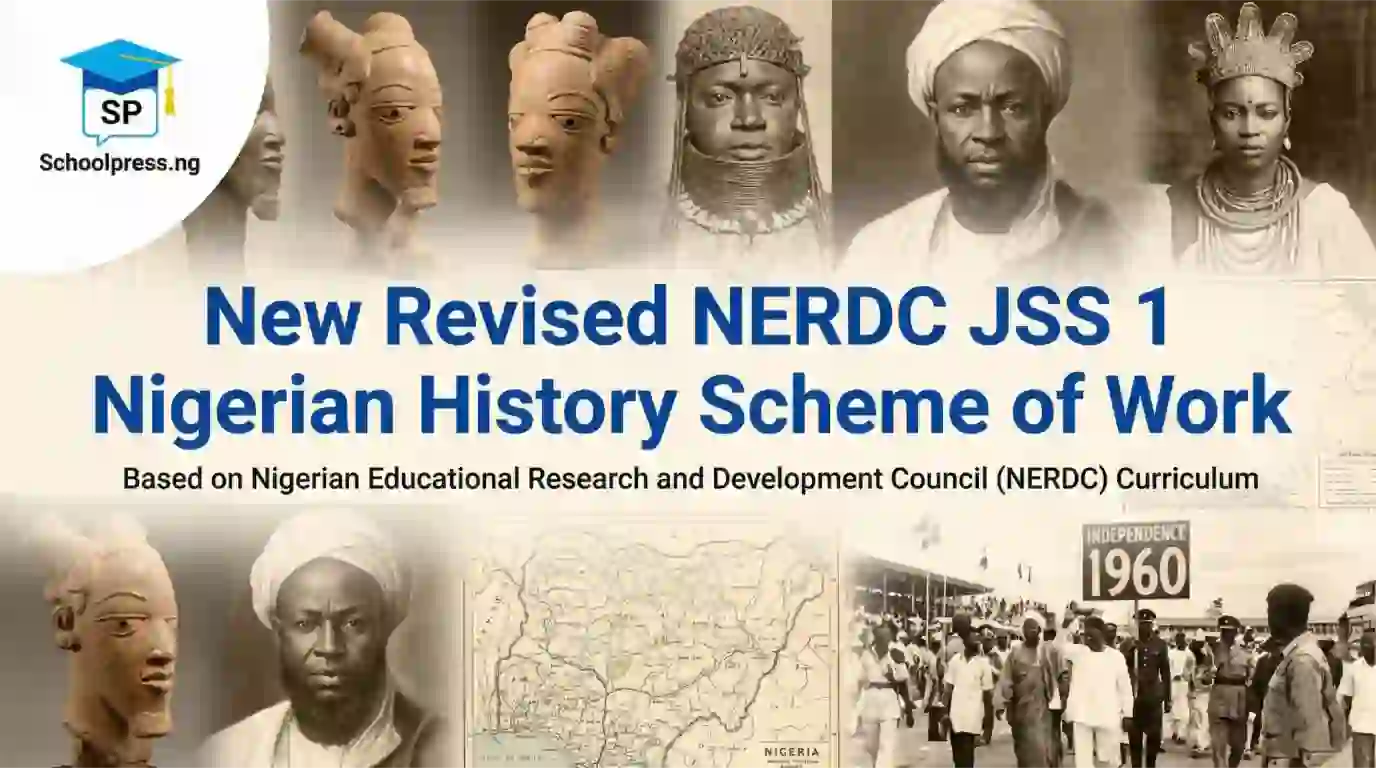
Week 1-2: Igbo-Ukwu Civilisation (Part 1)
1. Content: Knowledge: 1. Location of Igbo-Ukwu on the map of Nigeria. 2. Features of the Igbo-Ukwu culture. 3. Significance of Igbo-Ukwu culture in Nigerian History. 4. Challenges of Igbo-Ukwu culture. 5. Igbo-Ukwu culture as symbol of national pride.
2. Performance Objectives: Students should be able to: 1. identify the location of Igbo-Ukwu on the map of Nigeria; 2. identify the features of Igbo-Ukwu culture; 3. discuss the significance of Igbo-Ukwu culture; 4. discuss the challenges of Igbo-Ukwu culture.
3. Learning Activities:
i. Teacher Activities: The teacher introduces with map and pictures, plays videos, guides discussions on features and significance.
ii. Learning Activities: The learners identify the location of Igbo-Ukwu on the map of Nigeria, use pictures to identify and discuss the features of the Igbo-Ukwu culture and artefacts, watch video documentaries on Igbo-Ukwu culture and discuss its significance in Nigerian History.
4. Teaching and Learning Resources: Map of Nigeria for location; Pictures/Charts for features; Video documentaries to engage; Artefacts for examples; Texts for info.
Week 3: Major Centralised States in Pre-colonial Nigeria (Part 1)
1. Content: Knowledge: 1. Meaning of centralised states. 2. Characteristics of centralised states. 3. Examples of centralised states in pre-colonial Nigeria: Hausa states; Kanem Borno; Nupe Kingdom; Oyo Empire; Igala Kingdom; Benin Empire; Niger Delta City States; Kalabari Kingdom. 4. Locations of centralised states in Nigeria. 5. Centralised states as a source of pride.
2. Performance Objectives: Students should be able to: 1. explain the meaning of centralised states; 2. identify the characteristics of centralised states; 3. list examples of centralised states in Pre-colonial Nigeria; 4. identify the locations of centralised states in Nigeria.
3. Learning Activities:
i. Teacher Activities: The teacher guides internet searches in groups, facilitates chart discussions on examples, uses map for location activity.
ii. Learning Activities: The learners in groups search the internet for the meaning and characteristics of centralised states and discuss them, in groups use charts to discuss examples of centralised states in pre-colonial Nigeria, in pairs use the map of Nigeria to locate the centralised states in pre-colonial Nigeria.
4. Teaching and Learning Resources: Map of Nigeria for locations; Charts for examples; Computers for searches; Internet access for research.
Week 4: Major Centralised States in Pre-colonial Nigeria (Part 2)
1. Content: Knowledge: 1. Meaning of centralised states. 2. Characteristics of centralised states. 3. Examples of centralised states in pre-colonial Nigeria: Hausa states; Kanem Borno; Nupe Kingdom; Oyo Empire; Igala Kingdom; Benin Empire; Niger Delta City States; Kalabari Kingdom. 4. Locations of centralised states in Nigeria. 5. Centralised states as a source of pride.
2. Performance Objectives: Students should be able to: 1. explain the meaning of centralised states; 2. identify the characteristics of centralised states; 3. list examples of centralised states in Pre-colonial Nigeria; 4. identify the locations of centralised states in Nigeria; 5. Identify reasons why centralised states are a source of pride to Nigerians.
3. Learning Activities:
i. Teacher Activities: The teacher leads brainstorming on pride, reviews locations and examples.
ii. Learning Activities: The learners brain storm on developing pride in centralised states as political achievements, discuss reasons why centralised states are a source of pride to learners.
4. Teaching and Learning Resources: Map of Nigeria; Charts; Computers; Internet access.
Week 5: Major Centralised States in Pre-colonial Nigeria (Part 3)
1. Content: Knowledge: 1. Meaning of centralised states. 2. Characteristics of centralised states. 3. Examples of centralised states in pre-colonial Nigeria: Hausa states; Kanem Borno; Nupe Kingdom; Oyo Empire; Igala Kingdom; Benin Empire; Niger Delta City States; Kalabari Kingdom. 4. Locations of centralised states in Nigeria. 5. Centralised states as a source of pride.
2. Performance Objectives: Students should be able to: 1. explain the meaning of centralised states; 2. identify the characteristics of centralised states; 3. list examples of centralised states in Pre-colonial Nigeria; 4. identify the locations of centralised states in Nigeria; 5. Identify reasons why centralised states are a source of pride to Nigerians.
3. Learning Activities:
i. Teacher Activities: The teacher assigns narration tasks, facilitates deeper discussion on specific states like Hausa.
ii. Learning Activities: The learners narrate the history of selected centralised states, participate in extended group discussions on pride and achievements.
4. Teaching and Learning Resources: Map of Nigeria; Charts; Computers; Internet access; Textbooks for details.
Week 6: Revision of Major Centralised States
1. Content: Knowledge: Review of meaning, characteristics, examples, locations, and pride in centralised states. Skills: Comprehensive analysis and narration.
2. Performance Objectives: Students should demonstrate understanding of all aspects of centralised states through review.
3. Learning Activities:
i. Teacher Activities: The teacher conducts review sessions, quiz on key elements.
ii. Learning Activities: The learners engage in peer teaching and quizzes on centralised states.
4. Teaching and Learning Resources: Charts for summaries; Maps for locations; Textbooks for reference.
Week 7: Mid-Term Break
1. Content: N/A
2. Performance Objectives: N/A
3. Learning Activities:
i. Teacher Activities: The teacher conducts mid term test from week 1 to 6.
ii. Learning Activities: The learners take mid term test from week 1 to 6.
4. Teaching and Learning Resources: Test papers based on topics from week 1 to 6.
Week 8: Integrated Review: Early Civilisations
1. Content: Knowledge: Review features, significance, challenges of Nok, Ile-Ife, Benin, Igbo-Ukwu. Skills: Comparative analysis.
2. Performance Objectives: Students should compare civilisations and discuss national heritage.
3. Learning Activities:
i. Teacher Activities: The teacher leads comparative discussions.
ii. Learning Activities: The learners in groups compare civilisations using charts.
4. Teaching and Learning Resources: Pictures/Charts for comparisons; Video documentaries for recall; Maps for context.
Week 9: Integrated Review: Concept of History
1. Content: Knowledge: Review meaning, sources, importance. Skills: Application to decision-making.
2. Performance Objectives: Students should apply history concepts to real-life scenarios.
3. Learning Activities:
i. Teacher Activities: The teacher facilitates debates on history vs. storytelling.
ii. Learning Activities: The learners debate applications in groups.
4. Teaching and Learning Resources: Charts for concepts; Computers for examples; Internet for scenarios.
Week 10: Preparation for Assessments
1. Content: Knowledge: Overall term review. Skills: Synthesis of topics.
2. Performance Objectives: Students should prepare for mid-term assessments.
3. Learning Activities:
i. Teacher Activities: The teacher provides practice questions.
ii. Learning Activities: The learners solve practice exercises.
4. Teaching and Learning Resources: Textbooks; Past questions for practice.
Week 11: Revision
1. Content: N/A
2. Performance Objectives: N/A
3. Learning Activities:
i. Teacher Activities: The teacher revises all the lessons and prepares pupils for the exam.
ii. Learning Activities: The learners revise all topics covered.
4. Teaching and Learning Resources: Notes; Textbooks.
Week 12: Examination
1. Content: N/A
2. Performance Objectives: N/A
3. Learning Activities:
i. Teacher Activities: The teacher starts the exam for the term.
ii. Learning Activities: The learners take the exam for the term.
4. Teaching and Learning Resources: Examination materials.
Week 13: Examination, Marking & Vacation
1. Content: N/A
2. Performance Objectives: N/A
3. Learning Activities:
i. Teacher Activities: The teacher concludes examination together with marking and recording.
ii. Learning Activities: The learners complete exams, then vacation follows once all have been achieved.
4. Teaching and Learning Resources: N/A