
New Revised NERDC JSS 1 Nigerian History Scheme of Work
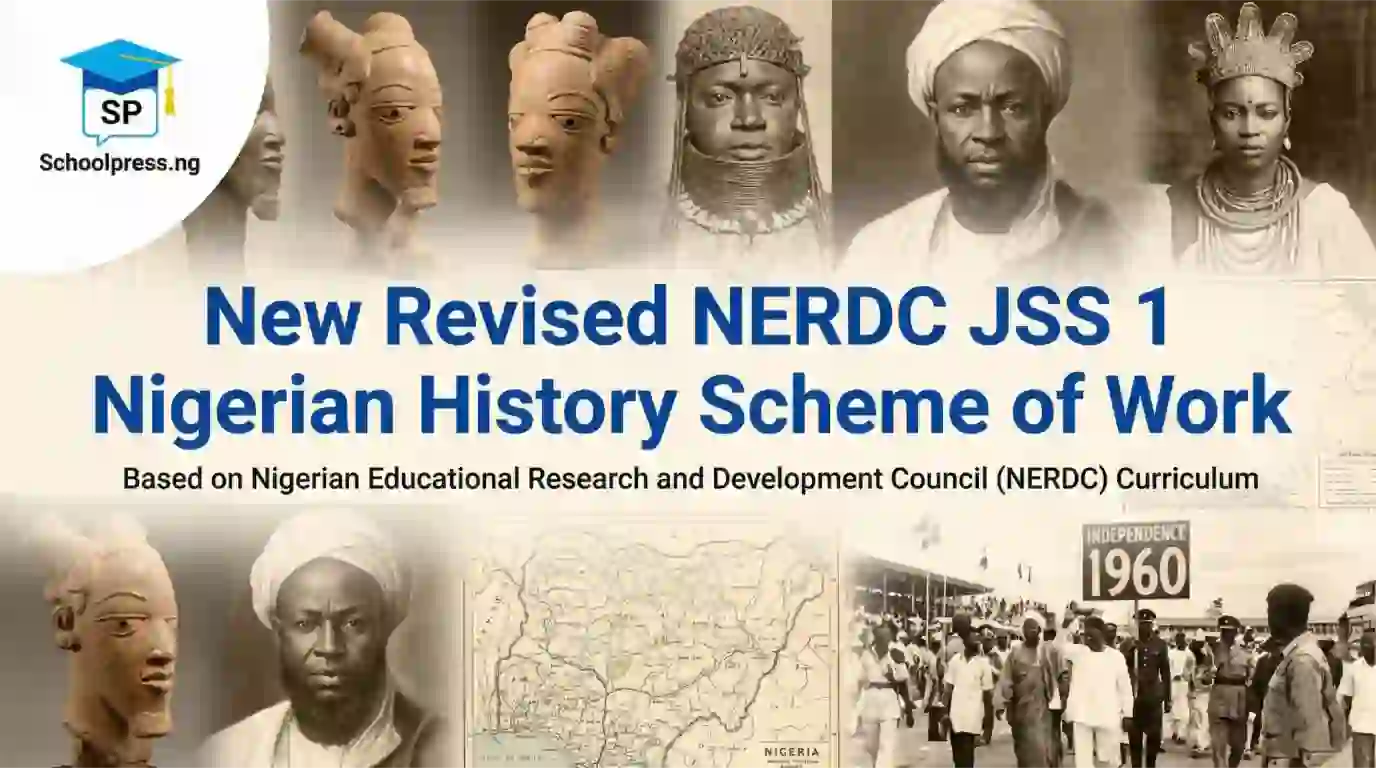
History is more than dates and events. It is the story of people, places, and ideas that shaped Nigeria. The New Revised NERDC JSS 1 Nigerian History Scheme of Work is designed to help learners see history as a living subject, not just something written in books.
The scheme begins with the meaning of history, its sources, and why it matters. Learners are guided to understand that history is not fiction, it is the record of real experiences that help us make better decisions today.
From there, the scheme explores Nigeria’s early civilisations: Nok, Ile-Ife, Benin, and Igbo-Ukwu. These cultures are presented as treasures of our heritage, showing the creativity and achievements of our ancestors.
The final theme introduces political developments in pre-colonial Nigeria. Learners discover how centralised states were formed and how leadership worked before colonial rule. This connects the past to the present, showing how governance has always been part of our story.
Table of Contents
Why the JSS 1 Nigerian History Scheme of Work is Important for Teachers
Teachers use this scheme to make history practical and meaningful. It gives them a clear path to guide learners from basic concepts to deeper understanding.
When teaching the meaning of history, teachers can encourage students to compare storytelling with real historical records. This helps learners see why facts matter in decision-making.
In lessons on sources of history, teachers can use oral traditions, artifacts, and written records. Learners discover that history is preserved in many forms, not just textbooks.
When teaching early civilisations, teachers can use maps, images, and stories to bring Nok terracotta, Benin art, and Igbo-Ukwu bronze works to life. This makes learners proud of their heritage.
Political developments allow teachers to explain how states like Oyo, Kanem-Bornu, and Benin were organised. Learners see that Nigeria’s history of leadership and governance stretches far back in time.
General Objectives of the JSS 1 Nigerian History Scheme of Work
The scheme of work aims to:
1. Expose learners to history as an instrument of nation-building.
2. Deepen understanding of Nigeria’s diverse peoples and cultures.
3. Promote the study of Nigerian and African history for global awareness.
4. Equip learners with 21st-century skills such as leadership, communication, and critical thinking.
These objectives matter because they connect history to everyday life. Learners see that history is not just about the past, it is about shaping the future.
Overview of JSS 1 Nigerian History Scheme of Work Content Coverage
| Theme | Learning Outcome | Topic(s) |
|---|---|---|
| Concept of History | Demonstrate knowledge of meaning, sources, and importance of history | Meaning of History, Sources of History, Importance of History |
| Major Early Civilisations of Nigeria | Appreciate Nok, Ile-Ife, Benin, and Igbo-Ukwu cultures as national heritage | Nok Culture, Ile-Ife Civilisation, Benin Civilisation, Igbo-Ukwu Civilisation |
| Political Developments in Nigeria | Appreciate pre-colonial Nigeria’s political achievements in state formation | Major Centralised States in Pre-colonial Nigeria |
The overview shows how themes are linked. Learners start with the foundation, what history is and why it matters. They then move to civilisations that shaped Nigeria’s identity. Finally, they explore political structures that show how leadership and organisation existed long before colonial rule.
Read Also: JSS 1 Scheme of Work