
2026 JAMB Subject Combination for Applied Microbiology and Brewing
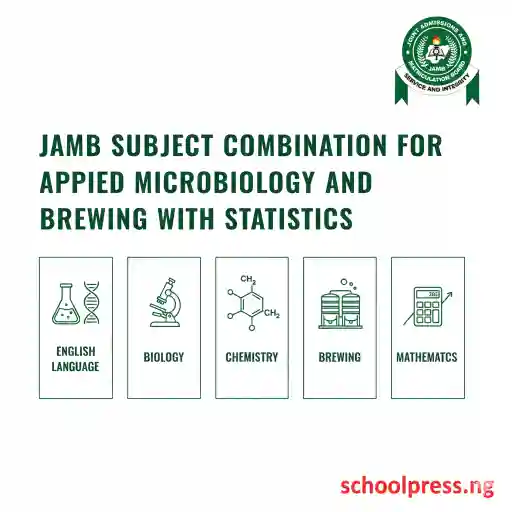
Meta Description: JAMB Subject Combination for Applied Microbiology and Brewing includes Biology, Chemistry, Physics or Mathematics. Learn O’Level requirements and universities.
Applied Microbiology and Brewing is a specialized course that combines microbiology with industrial brewing processes. Many students struggle to find accurate admission requirements for this program. This guide breaks down everything you need to know about gaining admission.
Getting the right subject combination is the first step toward studying this course. Wrong choices can cost you an entire academic year. Understanding both UTME and O’Level requirements helps you plan better.
This article covers O’Level requirements, JAMB subject combinations, Direct Entry options, universities offering the program, and career prospects. You’ll also find answers to common questions about Applied Microbiology and Brewing admissions.
Read Also: Jamb Subject Combination for all courses
O’Level Results Requirements for Applied Microbiology and Brewing
Your O’Level results form the foundation of your admission application. Most universities require five credit passes in relevant subjects at one or two sittings. These credits must include specific science subjects that relate directly to the course.
A. O’Level Requirements for Applied Microbiology and Brewing
You need five credit passes in SSCE, NECO, or GCE. The compulsory subjects are English Language, Mathematics, Biology, Chemistry, and Physics. Some universities accept Agricultural Science instead of Biology. All credits must be at O’Level, not A’Level or NABTEB equivalent.
The credits should come from one sitting or a maximum of two sittings. Federal universities are stricter about single sitting results. Private universities often show more flexibility with two sittings. Check your target university’s specific policy before applying.
B. How to Combine Two Sitting Results Strategically
If you have incomplete results from one sitting, you can combine two. Take the missing subjects in your second attempt. Don’t repeat subjects you already passed unless you failed woefully. Focus on getting the required credits you’re missing.
Register early for your second sitting to avoid missing admission deadlines. Some universities accept awaiting results, but not all do. Plan your retakes carefully to match admission timelines. Strong performance in science subjects matters more than borderline passes.
C. Common O’Level Mistakes That Kill JAMB Efforts
Many students register for wrong subject combinations in O’Level. Others ignore Mathematics, thinking it’s optional. Some use results from unrecognized examination bodies. These mistakes disqualify applications regardless of your JAMB score.
Another common error is poor subject substitution. Not every university accepts Agricultural Science for Biology. Physics is often mandatory, yet students skip it. Always verify your O’Level subjects match course requirements before purchasing JAMB forms.
JAMB Subject Combination for Applied Microbiology and Brewing
Your UTME subject selection determines whether you can apply for this course. Wrong subjects mean automatic disqualification. Most universities use similar combinations, but slight variations exist across institutions.
A. UTME/JAMB Subjects Combination for Applied Microbiology and Brewing
The standard JAMB subjects are Biology, Chemistry, and Physics. Some universities accept Mathematics instead of Physics. You must register for exactly these subjects during UTME registration. Biology and Chemistry are non-negotiable across all universities.
Physics is preferred because brewing involves industrial processes and equipment operations. Mathematics works as an alternative in universities with flexible policies. Always check your chosen university’s brochure before finalizing your UTME subjects.
B. Minimum UTME/JAMB Score Requirements
1. Federal Universities: 180-200 (varies by institution)
Federal universities like the Federal University of Technology, Akure typically require between 180 and 200. Top institutions set higher cut-off marks based on competition levels.
2. State Universities: 160-180
State universities generally have lower cut-off marks. However, popular state schools still maintain competitive standards around 180 marks.
3. Private Universities: 140-160
Private universities offer the most flexible cut-off marks. Some accept scores as low as 140, especially for candidates with strong O’Level results.
C. UTME/JAMB Subjects Special Consideration (Waiver) for Applied Microbiology and Brewing
Very few universities offer subject waivers for this science-based program. Federal University of Technology, Akure may consider Mathematics instead of Physics in specific cases. Nnamdi Azikiwe University accepts Agricultural Science for Biology under certain conditions.
Universities offering waivers still require strong justification from candidates. The waiver usually applies to one subject only. Your remaining subjects and O’Level results must be exceptional to qualify for consideration.
Direct Entry Requirements for Applied Microbiology and Brewing
Direct Entry allows candidates with advanced qualifications to enter 200 level directly. This option saves one academic year compared to UTME admission. You need recognized certificates like NCE, ND, or A’Level to qualify.
Who qualifies for Direct Entry? Candidates with National Diploma in related science fields qualify. Those with A’Level passes in relevant subjects can apply. NCE holders in science education also meet the basic criteria for consideration.
Who should consider Direct Entry for Applied Microbiology and Brewing? ND holders in Microbiology or Science Laboratory Technology fit perfectly. HND candidates seeking degree programs benefit from this route. A’Level students who studied Biology and Chemistry should explore this option.
A. Direct Entry Requirements and Qualifications for Applied Microbiology and Brewing
You need two A’Level passes in Chemistry and Biology or Physics. National Diploma holders require Upper Credit in Microbiology, Science Laboratory Technology, or related fields. NCE candidates must have merit passes in Biology and Chemistry combinations.
IJMB and Cambridge A’Level certificates work for Direct Entry applications. Your results must come from recognized institutions. Some universities also accept HND Lower Credit with substantial work experience in brewing industries.
B. O’Level Direct Entry Requirements for Applied Microbiology and Brewing
Direct Entry candidates still need five O’Level credits. The subjects remain English Language, Mathematics, Biology, Chemistry, and Physics. These credits can come from one or two sittings depending on university policy.
Your O’Level results must not be older than five years in most universities. Some institutions waive this time restriction for mature candidates. All credits must be genuine and verifiable through official channels.
C. Direct Entry Special Consideration (Waiver) for Applied Microbiology and Brewing
University of Nigeria, Nsukka accepts ND Lower Credit with relevant work experience. Federal University of Technology, Akure considers mature candidates without A’Level if they have industry certifications. Nnamdi Azikiwe University reviews HND holders individually for possible waivers.
These waivers are not automatic and require formal application. Your case must demonstrate exceptional circumstances or qualifications. Contact the admissions office of your target university for specific waiver procedures.
Universities Offering Applied Microbiology and Brewing
Only a few Nigerian universities offer this specialized program. The course combines science with industrial applications. Most institutions run it under Science and Technology faculties.
A. Federal Universities
- Federal University of Technology, Akure
- Nnamdi Azikiwe University, Awka
B. State Universities
- Rivers State University, Port Harcourt
- Osun State University, Osogbo
C. Private Universities
Currently, no accredited private universities in Nigeria offer Applied Microbiology and Brewing as a standalone program. Some private institutions offer Microbiology with brewing as an elective.
Career Prospects in Applied Microbiology and Brewing
Applied Microbiology and Brewing graduates have diverse career options in industries and research institutions. The brewing industry in Nigeria continues growing, creating more opportunities. Your skills apply beyond just beer production.
1. Brewery Microbiologist: You monitor fermentation processes and ensure product quality. Major brewing companies like Nigerian Breweries and Guinness Nigeria employ these specialists. Your role involves testing raw materials and finished products for contamination.
2. Quality Control Analyst: You work in food and beverage companies maintaining production standards. This position requires understanding microbial contamination and prevention. Pharmaceutical companies also hire for similar quality assurance roles.
3. Production Manager: You oversee entire brewing operations from raw materials to packaging. This role combines technical knowledge with management skills. Your microbiology background helps troubleshoot production challenges effectively.
4. Research Scientist: Universities and research institutes need specialists in industrial microbiology. You develop new brewing techniques or improve existing processes. Government agencies like NAFDAC also employ researchers for regulatory purposes.
5. Entrepreneur: You can start your own microbrewery or beverage production business. The craft beer market in Nigeria is expanding rapidly. Your technical knowledge gives you competitive advantage over non-specialists.
Frequently Asked Questions On Applied Microbiology and Brewing
1. Can I study Applied Microbiology and Brewing without Physics in JAMB?
Some universities accept Mathematics instead of Physics. Federal University of Technology, Akure allows this substitution. However, Biology and Chemistry remain compulsory across all institutions. Check your target university’s brochure for their specific policy.
2. What is the difference between Microbiology and Applied Microbiology and Brewing?
Microbiology covers all aspects of microorganisms broadly. Applied Microbiology and Brewing focuses specifically on industrial applications, especially fermentation and brewing. The latter includes more industrial training and practical brewery experience.
3. How many years does the program take?
UTME candidates complete the program in four years. Direct Entry students finish in three years. Industrial training usually happens during long vacations or dedicated semesters.
4. Is Applied Microbiology and Brewing marketable in Nigeria?
Yes, the brewing industry keeps growing in Nigeria. Food and beverage companies constantly need trained microbiologists. Your skills also transfer to pharmaceuticals, research, and quality control positions.
5. Can I work in breweries with just a degree in Microbiology?
Yes, but Applied Microbiology and Brewing gives you specialized advantage. You receive specific training in brewing processes and fermentation technology. Regular Microbiology graduates need additional on-the-job training for brewery positions.
6. What is the average cut-off mark for this course?
Federal universities typically require 180 to 200 marks. State universities accept between 160 and 180. Private institutions may go as low as 140 depending on competition.
7. Do I need Further Mathematics in O’Level?
No, ordinary Mathematics is sufficient for O’Level requirements. Further Mathematics is not a mandatory subject for this course. Focus on getting credit passes in the five required subjects.
8. Can I switch from another science course to Applied Microbiology and Brewing?
Yes, through internal transfer after your first year. You need good grades in your current program. The availability depends on your university’s transfer policy and departmental capacity.
9. Are there postgraduate options in this field?
Yes, you can pursue M.Sc. and Ph.D. in Industrial Microbiology or Brewing Science. Some universities offer specialized postgraduate diplomas in brewery technology. These programs enhance your career prospects significantly.
10. What salary range should I expect after graduation?
Entry-level positions in breweries start around N150,000 to N250,000 monthly. Experienced professionals earn significantly more, especially in multinational companies. Entrepreneurship in craft brewing can be more lucrative depending on your business success.
Source: Jamb Brochure