
2026 Jamb Subject Combination for Applied Geology
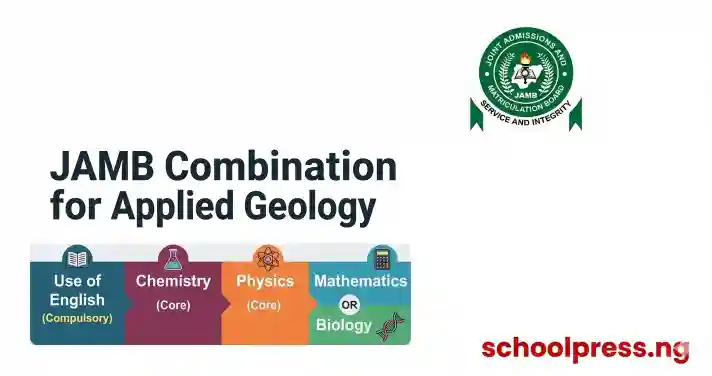
Jamb subject combination for Applied Geology is what you need to study earth materials and processes in Nigerian universities. This guide shows you the requirements for gaining admission. Getting into Applied Geology requires specific subjects that match the scientific nature of the course.
Many students lose admission chances because they choose wrong subject combinations. Others don’t know about Direct Entry options or waiver opportunities. Some universities have different requirements that can work in your favor.
This article covers O’Level requirements, JAMB subject combinations, Direct Entry qualifications, universities offering Applied Geology, career prospects, and answers to common questions about studying this course.
Read Also: Jamb Subject Combination for all courses
O’Level Results Requirements for Applied Geology
Your O’Level results form the foundation of your admission journey. Most universities require five credit passes in relevant subjects at one or two sittings. The subjects must include core science courses that prepare you for geology studies.
A. O’Level Requirements for Applied Geology
You need five credit passes in SSCE, NECO, or GCE. The subjects are Mathematics, English Language, Physics, Chemistry, and one of Geography or Biology. Some universities accept Agricultural Science instead of Biology. All credits must be obtained at one sitting or two sittings maximum.
B. How to Combine Two Sitting Results Strategically
Start with your strongest subjects in the first sitting. If you score C6 in Chemistry or Physics, retake only those weak subjects in the second sitting. Don’t repeat subjects you already passed. Focus your energy on the failed ones. This saves time and money while building a stronger result profile.
C. Common O’Level Mistakes That Kill JAMB Efforts
Many students skip Geography thinking any science subject works. Others use two sittings poorly by repeating passed subjects. Some combine WAEC and NECO without checking if their chosen university accepts mixed results. Always verify each university’s specific policy before combining results from different examination bodies.
Jamb Subject Combination for Applied Geology
Your UTME subject choice determines if you qualify for Applied Geology admission. Universities screen candidates based on these subjects before considering scores. Wrong subject combinations lead to automatic disqualification regardless of your JAMB score.
A. UTME/Jamb Subjects Combination for Applied Geology
The required subjects are Chemistry, Physics, and Mathematics. Chemistry is compulsory because geology involves studying rock compositions and chemical processes. Physics helps you understand earth mechanics and physical properties. Mathematics provides the analytical tools needed for geological calculations and data interpretation. These three subjects appear in every university’s requirement list.
B. Minimum UTME/Jamb Score Requirements
Federal Universities: 180-200 points depending on the institution. Universities like FUTO and ABU typically require 200 points. Less competitive federal schools accept 180 points.
State Universities: 160-180 points. State schools often have lower cutoffs. Check your preferred institution’s specific requirement each year.
Private Universities: 150-160 points. Private institutions usually have the most flexible score requirements but charge higher fees.
C. UTME/Jamb Subjects Special Consideration (Waiver) for Applied Geology
Federal University of Technology, Akure accepts Geography in place of Physics for some candidates. University of Benin considers Biology instead of Geography for Direct Entry applicants. Obafemi Awolowo University offers waivers for exceptional O’Level results. Always contact the admissions office to confirm current waiver policies before applying.
Direct Entry Requirements for Applied Geology
Direct Entry allows you to enter 200 level if you have advanced qualifications. This option suits candidates with A-Level, NCE, OND, or HND certificates. It shortens your university stay by one year.
Who qualifies for Direct Entry? You need two A-Level passes in relevant subjects or an Upper Credit in OND/HND Geology or related fields. NCE holders with science backgrounds also qualify. Your O’Level results must still meet the basic five credit requirements.
Who should consider Direct Entry for Applied Geology? Students with diplomas in Science Laboratory Technology, Geology, or Environmental Science benefit most. Those who spent time in polytechnics studying related courses can jump ahead. Mature students with professional geology experience also find this route advantageous.
A. Direct Entry Requirements and Qualifications for Applied Geology
You need two A-Level passes in Chemistry and Physics or Mathematics. NCE holders require Merit level in science subjects. OND/HND candidates must have Upper Credit in Geology, Mining, or related fields. Some universities accept Cambridge A-Level, JUPEB, or IJMB certificates as equivalent qualifications.
B. O’Level Direct Entry Requirements for Applied Geology
The O’Level requirements remain the same as UTME candidates. You still need five credits including Mathematics, English, Physics, Chemistry, and Geography or Biology. Direct Entry doesn’t exempt you from these basic requirements. Both your O’Level and advanced certificates undergo thorough screening during admission processing.
C. Direct Entry Special Consideration (Waiver) for Applied Geology
University of Ibadan accepts HND holders with Lower Credit if they have three years field experience. Federal University of Technology, Minna waives one A-Level subject for exceptional NCE candidates. University of Jos considers relevant industry certifications as part of qualification criteria. Contact each university’s postgraduate school for updated waiver information.
Universities Offering Applied Geology
A. Federal Universities
- Obafemi Awolowo University, Ile-Ife
- University of Ibadan, Ibadan
- Ahmadu Bello University, Zaria
- University of Benin, Benin City
- University of Jos, Jos
- University of Calabar, Calabar
- Federal University of Technology, Akure
- Federal University of Technology, Minna
- University of Ilorin, Ilorin
- University of Nigeria, Nsukka
- University of Maiduguri, Maiduguri
- Federal University, Oye-Ekiti
- Federal University of Petroleum Resources, Effurun
B. State Universities
- Ekiti State University, Ado-Ekiti
- Kogi State University, Anyigba
- Nasarawa State University, Keffi
- Osun State University, Osogbo
- Ibrahim Badamasi Babangida University, Lapai
C. Private Universities
- Bells University of Technology, Ota
- Coal City University, Enugu
- Afe Babalola University, Ado-Ekiti
D. Polytechnic Institutions
- Federal Polytechnic, Ado-Ekiti
- Kaduna Polytechnic, Kaduna
- Federal Polytechnic, Idah
- Auchi Polytechnic, Auchi
- Yaba College of Technology, Lagos
Career Prospects in Applied Geology
1. Petroleum Geologist: You explore and evaluate oil and gas reserves. This role involves analyzing rock samples and identifying drilling locations. Oil companies like Shell, Chevron, and TotalEnergies hire petroleum geologists regularly. Salaries range from 500,000 to 2 million naira monthly depending on experience.
2. Mining Geologist: You assess mineral deposits and oversee extraction operations. Mining companies need geologists to locate gold, coal, limestone, and other valuable minerals. This career offers field work opportunities across Nigeria’s mining regions.
3. Environmental Geologist: You study how human activities affect the earth. Your work includes assessing contamination sites and advising on waste disposal. Government agencies and environmental consulting firms employ these specialists to ensure sustainable development practices.
4. Hydrogeologist: You locate and manage groundwater resources. Communities need clean water supplies, making this role crucial. You drill boreholes and test water quality for residential and industrial purposes.
5. Engineering Geologist: You evaluate ground conditions for construction projects. Your reports determine if sites are safe for buildings, bridges, and roads. Construction companies and government agencies depend on your geological assessments.
6. Geophysicist: You use instruments to study earth’s physical properties. This career combines geology with advanced technology. Research institutions and exploration companies need geophysicists for seismic studies and magnetic surveys.
Frequently Asked Questions on Applied Geology
1. Can I study Applied Geology without Geography?
Yes, most universities accept Biology instead of Geography. Some schools allow Agricultural Science as an alternative. Check your chosen university’s specific O’Level requirements before registration.
2. What is the difference between Geology and Applied Geology?
Applied Geology focuses on practical applications in mining and petroleum. Pure Geology emphasizes theoretical earth science concepts. Both degrees lead to similar career paths with slight differences in curriculum emphasis.
3. Is Mathematics compulsory for Applied Geology?
Yes, Mathematics is compulsory for JAMB and O’Level requirements. The course involves calculations and data analysis. You cannot gain admission without Mathematics credit and JAMB subject inclusion.
4. Can I change to Applied Geology after admission?
Some universities allow course changes during first semester. You must meet Applied Geology’s subject requirements first. Visit your school’s academic office early to understand their change of course policy.
5. Do I need field experience before applying?
No, field experience is not required for fresh applicants. Universities provide practical training during your program. However, Direct Entry candidates with industry experience have admission advantages.
6. Which pays better, petroleum or mining geology?
Petroleum geology typically offers higher starting salaries. Oil companies provide better compensation packages than mining firms. However, mining geology offers more job security during oil price fluctuations.
7. Can OND holders apply for Direct Entry?
Yes, if you have Upper Credit in relevant programs. Your OND must be in Geology, Mining, or related science fields. Some universities require additional A-Level passes alongside your diploma.
8. Are there scholarships for Applied Geology students?
NNPC and PTDF offer scholarships for geology students. Many oil companies sponsor undergraduate education in exchange for post-graduation employment. Check with your university’s scholarship office for current opportunities.
9. How long does Applied Geology take to complete?
UTME students complete the program in four years. Direct Entry candidates finish in three years. Some students extend beyond these periods due to industrial training or failed courses.
10. Can I work abroad with a Nigerian Applied Geology degree?
Yes, Nigerian geology degrees receive international recognition. You may need additional certifications for some countries. Canadian and Australian mining companies actively recruit Nigerian geologists for their projects.
Source: Jamb Brochure