
2026 Jamb Subject Combination for Applied Botany
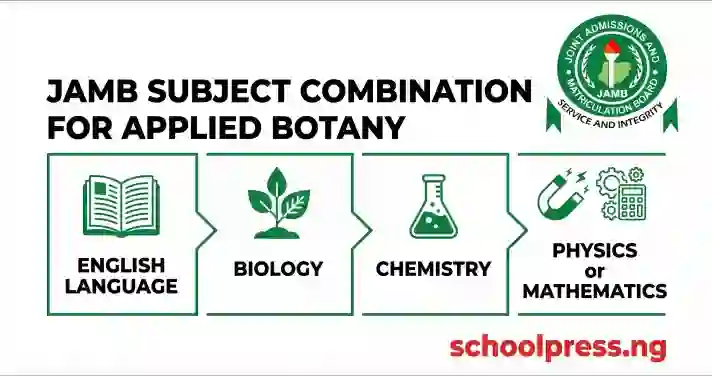
Jamb subject combination for Applied Botany is what every prospective student needs before applying to study this course. Many students miss admission because they pick wrong subjects or ignore key requirements. This guide shows you exactly what you need.
Applied Botany focuses on plant science and its practical applications. You’ll study plant structure, growth, diseases, and how plants help industries. It’s different from pure Botany because it emphasizes real-world uses.
Getting into Applied Botany requires careful planning. You need the right O’level subjects and correct JAMB combination. Some universities also accept waivers, which can help if you’re missing one subject.
This article covers O’level requirements, JAMB subject combinations, Direct Entry options, universities offering the course, career prospects, and answers to common questions about Applied Botany admissions.
Read Also: Jamb Subject Combination for all courses
O’Level Results Requirements for Applied Botany
Your O’level results form the foundation of your admission. Most universities want five credit passes in relevant subjects. You must include English Language and Mathematics. The other three should be science subjects that match Applied Botany.
A. O’Level Requirements for Applied Botany
You need credit passes in English Language, Mathematics, Biology, Chemistry, and Physics. These five subjects are standard across most Nigerian universities. Some schools accept Agricultural Science instead of Physics, but check with your preferred university first.
Biology is the most important subject here. It’s the foundation of Applied Botany. Chemistry comes second because you’ll study plant chemistry and soil science. Physics helps you understand plant processes at a deeper level.
B. How to Combine Two Sitting Results Strategically
JAMB accepts two O’level sittings for one admission cycle. You can combine WAEC, NECO, and GCE results. But there’s a smart way to do this. Pass English and Mathematics in your first sitting if possible.
Use your second sitting to improve science subjects. Don’t repeat subjects you already passed unless you’re aiming for better grades. Focus on getting the credits you’re missing. This approach saves time and increases your chances.
C. Common O’Level Mistakes That Kill JAMB Efforts
Many students fail because they ignore English Language or Mathematics. These two subjects must be credits, no exceptions. Another mistake is taking Geography instead of required science subjects. Applied Botany needs Biology, Chemistry, and Physics primarily.
Some students also wait too long between sittings. If you fail a subject, retake it quickly. Don’t let three years pass because some universities have time limits. Always confirm current requirements before registering for exams.
Jamb Subject Combination for Applied Botany
Your JAMB subject combination determines if you can even apply. Universities use this to screen candidates. Choose wrong subjects and your form gets rejected automatically. The right combination opens doors to multiple institutions.
A. UTME/Jamb Subjects Combination for Applied Botany
The standard JAMB combination is Biology, Chemistry, and Physics. Biology is compulsory for all universities offering Applied Botany. Chemistry is also required because plants and soil chemistry are core topics you’ll study.
Physics completes the combination. It helps you understand plant mechanics and environmental factors. Some universities accept Agricultural Science instead of Physics, but this varies. Always check the specific requirements of your chosen university.
B. Minimum UTME/Jamb Score Requirements
Federal Universities: 180 to 200 (varies by institution)
State Universities: 160 to 180
Private Universities: 140 to 180
Top federal universities like University of Ibadan want higher scores. They often set their cutoff at 200 or above. State universities are usually more flexible with cutoff marks between 160 and 180.
Private universities have the most flexible requirements. Many accept 140 and above. But don’t assume low scores guarantee admission. Competition still matters, especially in popular private schools.
C. UTME/Jamb Subjects Special Consideration (Waiver) for Applied Botany
Some universities grant waivers for specific subject deficiencies. University of Agriculture, Abeokuta accepts Agricultural Science instead of Physics. Federal University of Agriculture, Makurdi also considers this waiver for qualified candidates.
Ebonyi State University sometimes accepts students with strong Biology and Chemistry even without Physics. However, these waivers aren’t guaranteed every year. Contact the admission office directly to confirm current waiver policies before applying.
Direct Entry Requirements for Applied Botany
Direct Entry lets you enter year two of the program. You skip the first year if you have advanced qualifications. It’s for people with A’levels, NCE, OND, or HND in related fields.
Who qualifies for Direct Entry? Anyone with two A’level passes in relevant subjects. NCE holders in Biology or related sciences can apply. OND and HND graduates from science programs also qualify.
You should consider Direct Entry for Applied Botany if you already studied science at advanced levels. It saves one year and gets you to graduation faster. The requirements are specific, so check if you meet them.
A. Direct Entry Requirements and Qualifications for Applied Botany
Universities accept two A’level passes in Biology and Chemistry. Some schools also accept Biology and Physics combinations. Your A’level grades should be C or better for competitive programs.
NCE in Biology, Chemistry, or related sciences qualifies you. The NCE must be from an accredited College of Education. Your minimum grade should be merit level for most universities.
OND and HND in Science Laboratory Technology, Botany, or related fields work too. You need Upper Credit or Distinction. Lower grades reduce your chances significantly.
B. O’level Direct Entry Requirements for Applied Botany
Even with Direct Entry qualifications, you still need good O’level results. Five credits including English Language and Mathematics remain compulsory. Add Biology, Chemistry, and Physics to complete the requirements.
The O’level results must not be older than five years in most universities. Some federal universities are strict about this rule. Make sure your results are recent enough before applying.
C. Direct Entry Special Consideration (Waiver) for Applied Botany
University of Ilorin accepts NCE holders with merit in Biology only, without Chemistry A’level. Federal University of Technology, Akure considers HND holders even with lower credit grades if they have strong recommendations.
Obafemi Awolowo University sometimes waives the second A’level requirement for exceptional NCE graduates. These waivers depend on space availability and your overall academic record. Confirm before submitting your application.
Universities Offering Applied Botany
A. Federal Universities
- University of Ibadan
- University of Lagos
- Obafemi Awolowo University, Ile-Ife
- University of Benin
- University of Ilorin
- Federal University of Agriculture, Abeokuta
- Federal University of Agriculture, Makurdi
- University of Nigeria, Nsukka
- Ahmadu Bello University, Zaria
- Federal University of Technology, Akure
B. State Universities
- Lagos State University
- Ekiti State University
- Ebonyi State University
- Kogi State University
- Nasarawa State University
- Kaduna State University
- Rivers State University
- Imo State University
C. Private Universities
- Covenant University
- Bowen University
- Landmark University
- Afe Babalola University
- Bells University of Technology
- Crawford University
- Wesley University
D. Polytechnic Institution
- Federal Polytechnic, Ado-Ekiti
- Yaba College of Technology
- Federal Polytechnic, Ilaro
- Kaduna Polytechnic
E. College of Education
- Federal College of Education, Akoka
- Adeyemi College of Education
- Federal College of Education (Technical), Asaba
Career Prospects in Applied Botany
1. Plant Pathologist: You diagnose and treat plant diseases in farms and research centers. This role pays well in agricultural companies and government agencies. Your knowledge of plant health makes you valuable.
2. Agricultural Extension Officer: You teach farmers modern plant cultivation techniques. Government agencies and NGOs need these professionals. You bridge the gap between research and practical farming.
3. Horticulturist: You manage gardens, greenhouses, and ornamental plant businesses. Hotels, estates, and landscaping companies hire horticulturists regularly. The decorative plant industry is growing in Nigeria.
4. Research Scientist: Universities and research institutes need Applied Botany graduates. You study plant genetics, breeding, and environmental adaptation. This path leads to academic and research careers.
5. Quality Control Officer: Food and pharmaceutical companies need you to check plant-based products. You ensure standards are met before products reach consumers. Manufacturing companies value this expertise.
6. Environmental Consultant: You advise companies on vegetation management and environmental impact. Construction firms and oil companies need plant specialists. Your knowledge helps them comply with environmental regulations.
Frequently Asked Questions On Applied Botany
1. Can I study Applied Botany without Physics in JAMB?
Some universities accept Agricultural Science instead of Physics. University of Agriculture Abeokuta and Federal University of Agriculture Makurdi consider this alternative. However, confirm with your specific university before registering.
2. What’s the difference between Botany and Applied Botany?
Botany focuses on theoretical plant science and research. Applied Botany emphasizes practical applications in agriculture, medicine, and industry. Applied Botany graduates work more in commercial settings than pure research.
3. Is Applied Botany a marketable course in Nigeria?
Yes. The agricultural sector is growing and needs plant specialists. Food security concerns create jobs in crop production and plant disease management. Private companies also hire for quality control and research positions.
4. Can I work in pharmaceutical companies with Applied Botany?
Absolutely. Many drugs come from plants. Pharmaceutical companies need people who understand plant chemistry and cultivation. You can work in product development, quality assurance, or raw material sourcing.
5. What JAMB score do I need for Applied Botany in UNILAG?
University of Lagos usually sets cutoff around 200 or higher. But the actual admission score depends on competition each year. Aim for 220 and above to be competitive.
6. Do I need Further Mathematics for Applied Botany?
No. Regular Mathematics is sufficient. Further Mathematics isn’t required for Applied Botany in any Nigerian university. Focus on getting credits in Biology, Chemistry, and Physics instead.
7. Can HND in Science Lab Technology qualify me for Direct Entry?
Yes, if you have Upper Credit or Distinction. Most universities accept HND in Science Laboratory Technology for Direct Entry. Your specialization should relate to Biology or Chemistry.
8. How long is Applied Botany program in Nigerian universities?
Four years for UTME candidates. Direct Entry students complete it in three years. The program includes practical fieldwork, laboratory sessions, and a final year research project.
9. Can I become a lecturer with Applied Botany degree?
Yes, but you need higher degrees. Get your Masters and PhD in Applied Botany or related fields. Universities hire lecturers who have research experience and publications.
10. Which university is best for Applied Botany in Nigeria?
University of Ibadan has strong reputation for plant sciences. Federal University of Agriculture Abeokuta specializes in applied agricultural programs. Both offer excellent facilities and experienced lecturers for Applied Botany students.
Source: Jamb Brochure