
2026 JAMB Subject Combination for Anthropology
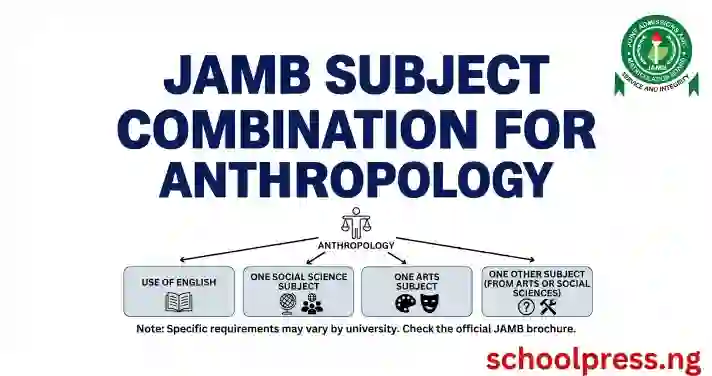
The JAMB subject combination for Anthropology is a critical requirement for students seeking admission into this social science program.
Many prospective students struggle to identify the correct subjects, leading to disqualification during the screening process. Understanding these requirements saves time and prevents costly mistakes.
Anthropology studies human societies, cultures, and their development across time and space. Nigerian universities offer this program at undergraduate and postgraduate levels. Students learn research methods, cultural analysis, and human behavior patterns.
This guide covers O’Level requirements, UTME subject combinations, Direct Entry qualifications, universities offering the program, and career opportunities. You will find practical information to navigate the admission process successfully.
Real Also: Jamb Subject Combination for all courses
O’Level Results Requirements for Anthropology
Students must meet specific O’Level requirements before applying for Anthropology in Nigerian universities. These requirements form the foundation for admission consideration alongside UTME scores. Most universities accept results from WAEC, NECO, NABTEB, and GCE.
A. O’Level Requirements for Anthropology
The O’Level requirements for Anthropology include five credit passes in relevant subjects. English Language is compulsory for all applicants. Mathematics is required by most universities, though some accept a pass grade.
The other three credits must come from Arts or Social Science subjects. Government, History, Literature in English, Geography, Economics, and CRS/IRS qualify. Some universities accept Biology or other Science subjects as alternatives.
Students must obtain these credits in not more than two sittings. The combination must align with the specific university’s requirements. Check the institution’s brochure before making subject choices.
B. How to Combine Two Sitting Results Strategically
Combining two sitting results requires careful planning to meet university requirements. Students should ensure their first sitting covers core subjects like English and Mathematics. This strategy reduces pressure in the second attempt.
Identify your weak subjects from the first sitting. Focus preparation on these areas while maintaining performance in other subjects. Avoid repeating subjects where you already have credits unless necessary for score improvement.
Ensure both results combine to give five credits in relevant subjects. Some universities prefer single sitting results for competitive programs. Check institutional preferences before relying on two sittings for your application.
C. Common O’Level Mistakes That Kill JAMB Efforts
Many students register for wrong subject combinations that do not meet university requirements. This mistake leads to automatic disqualification regardless of UTME performance. Always verify requirements from official university sources before sitting for O’Level examinations.
Another common error involves writing irrelevant subjects that waste examination slots. Some students focus on Science subjects when applying for Anthropology. This creates gaps in their O’Level requirements.
Poor subject selection in the second sitting also causes problems. Students sometimes repeat subjects they already passed instead of covering deficiencies. Plan both sittings to complement each other and fulfill all admission requirements.
JAMB Subject Combination for Anthropology
The UTME subject combination determines eligibility for Anthropology programs across Nigerian universities. These subjects must align with O’Level results and university-specific requirements. Proper selection increases your chances of qualifying for post-UTME screening.
A. UTME/JAMB Subjects Combination for Anthropology
The standard JAMB subject combination for Anthropology includes English Language, which is compulsory for all candidates. Government or History forms the second core subject. Most universities require one of these subjects.
The third subject should be any other Arts or Social Science subject. This includes Literature in English, Geography, Economics, CRS/IRS, or French. Some universities accept Biology as an alternative third subject.
The fourth subject offers flexibility in most institutions. Students can choose from Economics, Geography, Literature in English, or any relevant Arts subject. Confirm your chosen university’s specific requirements as variations exist across institutions.
B. Minimum UTME/JAMB Score Requirements
- Federal Universities: 180 to 200 points depending on the institution and competition level. Top federal universities like University of Ibadan and University of Nigeria require higher scores around 200 and above for admission consideration.
- State Universities: 160 to 180 points for most state-owned institutions. Some newly established state universities accept lower scores depending on application volume and available spaces.
- Private Universities: 140 to 180 points across different private institutions. Private universities often show more flexibility with cut-off marks while maintaining quality standards through rigorous post-UTME screening processes.
C. UTME/JAMB Subjects Special Consideration (Waiver) for Anthropology
Several universities offer subject waivers or alternative combinations for Anthropology students. University of Ibadan accepts Economics or Geography in place of Government/History. This flexibility accommodates students from different academic backgrounds.
Obafemi Awolowo University considers candidates with strong Social Science backgrounds. They may waive strict subject requirements for exceptional students. University of Lagos accepts Biology as a third subject for Anthropology applicants.
Ahmadu Bello University provides waivers for candidates with relevant diploma qualifications. These students may not need all traditional UTME subjects. Always contact the admissions office to confirm current waiver policies before applying.
Direct Entry Requirements for Anthropology
Direct Entry provides an alternative admission pathway for qualified candidates into Anthropology programs. This route allows students with advanced qualifications to enter at 200 level. It reduces the duration of study and accommodates diverse academic backgrounds.
Direct Entry applicants must possess relevant qualifications like NCE, IJMB, Cambridge A-Level, or OND/HND. The qualification must include subjects related to Social Sciences or Arts. Universities assess these credentials alongside O’Level results for admission decisions.
Students with strong academic performance in diploma programs should consider Direct Entry for Anthropology. Those who completed NCE with Social Studies or related subjects qualify. This pathway suits mature students returning to formal education after work experience.
A. Direct Entry Requirements and Qualifications for Anthropology
Candidates applying through Direct Entry must hold acceptable qualifications recognized by Nigerian universities. Two A-Level passes in Arts or Social Science subjects qualify applicants. These passes should include subjects like History, Government, Geography, or Economics.
National Certificate in Education (NCE) holders need merit or distinction in relevant subjects. Social Studies, History, or related Arts subjects from recognized colleges qualify. IJMB candidates require minimum grades in Arts or Social Science subjects.
OND or HND holders from accredited polytechnics may qualify depending on the university. The diploma must be in Social Sciences or related fields with minimum lower credit. University acceptance letters specify exact grade requirements for each qualification type.
B. O’Level Direct Entry Requirements for Anthropology
Direct Entry candidates must still meet O’Level requirements alongside their advanced qualifications. Five credit passes remain mandatory including English Language and Mathematics. These credits must come from relevant Arts or Social Science subjects.
The O’Level result should not be older than five years for most institutions. Some universities accept older results if supported by recent academic achievements. Credits must include subjects that align with the chosen course and university requirements.
Students using Direct Entry cannot combine deficient O’Level results with advanced qualifications. All five credits must be present before application. Universities verify these requirements strictly during the screening process regardless of diploma grades.
C. Direct Entry Special Consideration (Waiver) for Anthropology
University of Ibadan offers waivers for candidates with strong NCE results in Social Studies. These students may enter without strict A-Level requirements. Ahmadu Bello University accepts HND holders in Mass Communication or Public Administration for Anthropology programs.
Obafemi Awolowo University provides special consideration for mature students with relevant work experience. Candidates above 25 years with professional qualifications may receive waivers. University of Lagos accepts IJMB with passes in Arts subjects as alternative to A-Levels.
Some universities waive Mathematics requirements for NCE holders with strong Arts backgrounds. Contact the specific institution’s admissions office to understand available waivers. These provisions change periodically based on institutional policies and accreditation requirements.
Universities Offering Anthropology
Nigerian universities offer Anthropology as an undergraduate program across federal, state, and private institutions. The program’s availability varies by institution type and regional location. Students should verify current accreditation status before applying.
A. Federal Universities
- University of Ibadan, Ibadan
- University of Nigeria, Nsukka
- Ahmadu Bello University, Zaria
- Obafemi Awolowo University, Ile-Ife
- University of Lagos, Akoka
- University of Benin, Benin City
- University of Calabar, Calabar
- University of Port Harcourt, Port Harcourt
- University of Ilorin, Ilorin
- Bayero University, Kano
B. State Universities
- Lagos State University, Ojo
- Ekiti State University, Ado-Ekiti
- Adekunle Ajasin University, Akungba-Akoko
- Osun State University, Osogbo
- Ebonyi State University, Abakaliki
- Delta State University, Abraka
- Nasarawa State University, Keffi
C. Private Universities
- Afe Babalola University, Ado-Ekiti
- Bowen University, Iwo
- Covenant University, Ota
- Igbinedion University, Okada
- Redeemer’s University, Ede
D. College of Education
- Federal College of Education, Zaria
- Adeyemi College of Education, Ondo
- Federal College of Education (Technical), Akoka
These institutions offer Anthropology as part of Social Studies programs for NCE students. The qualification allows graduates to teach at basic education levels. Some students use NCE as Direct Entry pathway into university Anthropology programs.
Career Prospects in Anthropology
Anthropology graduates find opportunities across various sectors requiring cultural understanding and research skills. The field offers diverse career paths beyond traditional academic positions. Professionals apply anthropological knowledge to solve real-world problems.
1. Academic Research and Teaching: Graduates work as lecturers in universities and research institutes. They conduct studies on cultural practices, social structures, and human behavior. This career requires postgraduate qualifications and strong analytical abilities.
2. Museum and Heritage Management: Anthropology graduates curate museum collections and preserve cultural artifacts. They develop educational programs and manage historical sites. This role combines research skills with public education responsibilities.
3. International Development Organizations: NGOs and development agencies employ anthropologists to design culturally appropriate programs. These professionals assess community needs and evaluate project impacts. Understanding local cultures ensures effective intervention strategies.
4. Social Research and Consultancy: Private firms hire anthropologists to study consumer behavior and market trends. They conduct ethnographic research for businesses and government agencies. This career offers competitive salaries in corporate environments.
5. Human Resources and Organizational Development: Companies use anthropological insights to improve workplace cultures and employee relations. Graduates analyze organizational structures and recommend changes. This field values cultural sensitivity and communication skills.
6. Public Policy and Administration: Government agencies employ anthropologists to develop inclusive policies. They assess the social impact of programs on different communities. This career influences decision-making at local and national levels.
7. Media and Documentary Production: Anthropology graduates create content exploring cultural diversity and social issues. They work as researchers, writers, and producers for television and digital platforms. This career combines creativity with academic knowledge.
Frequently Asked Questions On Anthropology
1. Can I study Anthropology with a Science background in O’Level?
Yes, you can study Anthropology with a Science background if you have the required Arts or Social Science subjects in UTME. Most universities accept Biology as a third subject. However, you must still have English, Government or History, and another Arts subject in your JAMB combination.
2. What is the difference between Anthropology and Sociology?
Anthropology focuses on human cultures, evolution, and diversity across different societies. Sociology examines modern social structures, institutions, and relationships within societies. Both fields overlap but Anthropology emphasizes cross-cultural comparisons and historical perspectives while Sociology concentrates on contemporary social issues.
3. Is Mathematics compulsory for Anthropology in all universities?
Most universities require a credit in Mathematics at O’Level for Anthropology admission. However, some institutions accept a pass grade in Mathematics if other requirements are met. University of Ibadan and University of Nigeria typically insist on credit level while some state universities show flexibility.
4. Can I work in the oil and gas industry with an Anthropology degree?
Yes, oil and gas companies employ anthropologists for community relations and social impact assessment roles. These professionals help companies understand local communities affected by operations. They facilitate stakeholder engagement and develop corporate social responsibility programs.
5. How long does it take to complete Anthropology at the university level?
Anthropology requires four years for UTME entrants and three years for Direct Entry candidates. This duration applies to most Nigerian universities offering the program. Part-time and distance learning options may take longer depending on institutional arrangements.
6. Do I need to combine Anthropology with another course?
No, Anthropology is a complete standalone degree program in Nigerian universities. Some institutions offer it as Anthropology and Sociology or combined honors with related fields. Check your chosen university’s program structure to understand the specific offering available.
7. Can Anthropology graduates pursue postgraduate studies in other fields?
Yes, Anthropology graduates can pursue postgraduate programs in Sociology, Development Studies, International Relations, Public Administration, and related fields. The broad social science foundation provides flexibility for further specialization. Some graduates transition into Law, Mass Communication, or Business Administration at postgraduate level.
8. What is the job market like for Anthropology graduates in Nigeria?
The job market for Anthropology graduates remains competitive but expanding. Opportunities exist in research institutions, NGOs, museums, consulting firms, and government agencies. Graduates with strong research and analytical skills find employment more easily. Developing additional skills in data analysis or project management improves employability.
9. Can I teach in secondary schools with an Anthropology degree?
Yes, Anthropology graduates can teach Social Studies in secondary schools after obtaining teaching qualifications. NCE holders teach at basic education levels while degree holders qualify for secondary schools. Additional professional certification from teaching regulatory bodies may be required.
10. Which university offers the best Anthropology program in Nigeria?
University of Ibadan, University of Nigeria Nsukka, and Obafemi Awolowo University have strong Anthropology programs with experienced faculty. These institutions offer comprehensive research facilities and established academic traditions. However, the best program depends on your specific interests, location preferences, and career goals.
Source: Jamb Brochure