
2026 JAMB Subject Combination for Animal Breeding and Genetics
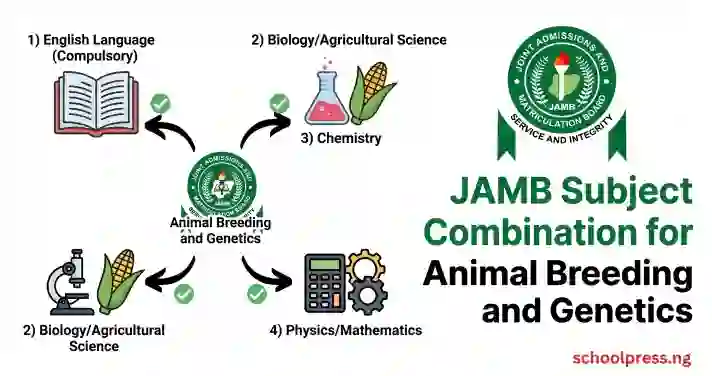
JAMB subject combination for Animal Breeding and Genetics is a critical requirement for students seeking admission into this specialized agricultural science program. Many prospective students lose admission opportunities because they register for the wrong UTME subjects or fail to meet the O’Level requirements.
Getting your subject combination right is the first step toward securing admission. This course trains professionals who improve livestock quality through scientific breeding methods and genetic research.
Nigeria’s agricultural sector needs skilled animal breeders and geneticists. The livestock industry continues to grow, creating demand for graduates who understand breeding techniques and genetic principles.
This article provides complete information on JAMB subject requirements, O’Level combinations, Direct Entry qualifications, universities offering the program, and career opportunities. You will also find answers to frequently asked questions about Animal Breeding and Genetics admission requirements.
Real Also: Jamb Subject Combination for all courses
O’Level Results Requirements for Animal Breeding and Genetics
Your O’Level results form the foundation of your admission application. Most universities require five credit passes in relevant subjects at one or two sittings. The subjects must include English Language, Mathematics, Biology, Chemistry, and Physics or Agricultural Science.
Understanding how to present your O’Level results strategically can improve your admission chances. Some universities accept two sitting results, while others prefer single sitting candidates during competitive admission processes.
A. O’Level Requirements for Animal Breeding and Genetics
You need five credit passes in SSCE, NECO, GCE, or NABTEB. English Language and Mathematics are compulsory for all universities. Biology and Chemistry must appear in your results as core science subjects.
The fifth subject should be Physics or Agricultural Science. Most universities accept either option, but some institutions prefer Agricultural Science for this program. Check your chosen university’s specific requirements before registration.
B. How to Combine Two Sitting Results Strategically
If you are using two sitting results, ensure English and Mathematics appear in your better result. Place your science subjects where you scored highest grades. This presentation shows academic strength in core areas.
Never repeat the same subject in both sittings unless you failed it initially. Universities accept result combinations that show five distinct credit passes across both examinations.
C. Common O’Level Mistakes That Kill JAMB Efforts
Many students register for Physics and Agricultural Science together when only one is required. This mistake wastes subject slots that could strengthen other weak areas. Focus on the five essential subjects only.
Another error is ignoring subject timing requirements. Some universities reject results obtained more than five years before application. Always verify the acceptable result validity period for your target institutions.
JAMB Subject Combination for Animal Breeding and Genetics
Your UTME subject selection determines whether universities will consider your application. Animal Breeding and Genetics requires three science subjects that align with the course’s biological and chemical focus.
Choosing wrong JAMB subjects automatically disqualifies you regardless of your score. This section clarifies the exact subject combination and minimum scores required across different university categories.
A. UTME/JAMB Subjects Combination for Animal Breeding and Genetics
The standard JAMB subject combination includes Biology, Chemistry, and Physics or Mathematics. Biology is compulsory because the course involves studying animal life processes and genetic inheritance patterns.
Chemistry is essential for understanding biochemical processes in animal breeding. Your third subject can be either Physics or Mathematics, depending on the university. Most institutions accept Mathematics as an alternative to Physics.
B. Minimum UTME/JAMB Score Requirements
1. Federal Universities: 180 to 200 (varies by institution)
Federal universities typically set higher cut-off marks due to competition. Universities like the University of Ibadan and Ahmadu Bello University often require scores above 200 for merit admission consideration.
2. State Universities: 160 to 180
State universities generally maintain moderate cut-off marks. However, popular state institutions may raise their requirements during highly competitive admission years.
3. Private Universities: 140 to 160
Private universities usually have lower cut-off marks but maintain strict O’Level requirements. They offer faster admission processing and smaller class sizes for personalized learning experiences.
C. UTME/JAMB Subjects Special Consideration (Waiver) for Animal Breeding and Genetics
University of Agriculture, Makurdi accepts Mathematics in place of Physics for candidates with strong Agricultural Science backgrounds. Federal University of Agriculture, Abeokuta also grants waivers for Mathematics substitution under specific conditions.
Some universities waive Physics requirements for candidates holding National Diploma in related agricultural programs. Always contact the admissions office directly to confirm current waiver policies before making assumptions.
Direct Entry Requirements for Animal Breeding and Genetics
Direct Entry allows qualified candidates to enter 200 level, bypassing the first year. This admission route suits candidates with advanced qualifications like A-Levels, NCE, or National Diploma in relevant fields.
Direct Entry admission typically takes two to three years instead of the standard four years. This option saves time and money for candidates who already possess foundational knowledge in agricultural sciences.
A. Direct Entry Requirements and Qualifications for Animal Breeding and Genetics
You need two A-Level passes in Chemistry and Biology or Zoology. NCE holders require merit passes in Biology, Chemistry, and one other science subject. These qualifications demonstrate advanced preparation for university-level studies.
National Diploma holders from accredited polytechnics must have Upper Credit or Distinction in Animal Science or related programs. The diploma program must align with Animal Breeding and Genetics curriculum requirements.
B. O’Level Direct Entry Requirements for Animal Breeding and Genetics
Direct Entry candidates still need five O’Level credit passes. The subjects remain English Language, Mathematics, Biology, Chemistry, and Physics or Agricultural Science. These requirements apply regardless of your advanced qualification type.
Your O’Level results must meet the same standards as UTME candidates. Some universities accept O’Level results obtained within ten years for Direct Entry applicants, providing more flexibility than UTME requirements.
C. Direct Entry Special Consideration (Waiver) for Animal Breeding and Genetics
Federal University of Technology, Minna accepts HND in Animal Production for Direct Entry without A-Level requirements. University of Ilorin considers IJMB certificates with good grades in Biology and Chemistry as A-Level equivalents.
Obafemi Awolowo University grants waivers for candidates with professional certifications in livestock management. Always verify current waiver policies through official university bulletins before applying.
Universities Offering Animal Breeding and Genetics
1. Federal Universities:
- Ahmadu Bello University, Zaria
- Federal University of Agriculture, Abeokuta
- Federal University of Agriculture, Makurdi
- Michael Okpara University of Agriculture, Umudike
- University of Ibadan, Ibadan
- University of Ilorin, Ilorin
- Federal University Dutse, Jigawa
- University of Maiduguri, Borno
2. State Universities:
- Enugu State University of Science and Technology, Enugu
- Nasarawa State University, Keffi
- Taraba State University, Jalingo
- Ekiti State University, Ado Ekiti
- Adekunle Ajasin University, Akungba-Akoko
3. Private Universities:
- Achievers University, Owo
- Landmark University, Omu-Aran
- Bowen University, Iwo
- Adeleke University, Ede
Career Prospects in Animal Breeding and Genetics
Animal Breeding and Genetics graduates find opportunities across multiple agricultural and research sectors. The growing livestock industry and increasing food production demands create steady employment possibilities for qualified professionals.
1. Livestock Breeding Specialist: You will design breeding programs that improve animal traits like milk production, meat quality, and disease resistance. This role requires understanding genetic principles and practical breeding techniques.
2. Genetic Research Scientist: Work in research institutions studying animal DNA, inheritance patterns, and gene expression. These positions often involve laboratory work and field studies on livestock populations.
3. Farm Manager: Oversee large-scale livestock operations, implementing breeding strategies that maximize productivity. Your genetic knowledge helps select superior breeding stock and manage herd improvement programs.
4. Animal Nutrition Consultant: Advise farms on feeding programs that support genetic potential in livestock. Understanding genetics helps you create nutrition plans that enhance inherited growth and production traits.
5. University Lecturer: Teach animal breeding and genetics courses while conducting research. Academic positions require advanced degrees but offer opportunities to shape future agricultural professionals.
6. Government Agricultural Officer: Work with agricultural ministries implementing national livestock improvement programs. You will help farmers adopt better breeding practices and genetic technologies.
Frequently Asked Questions On Animal Breeding and Genetics
1. Can I study Animal Breeding and Genetics with Agricultural Science instead of Physics?
Yes, most universities accept Agricultural Science as a valid substitute for Physics in both O’Level and JAMB requirements. However, you should verify this with your specific target institutions.
2. What is the difference between Animal Breeding and Genetics and Animal Science?
Animal Breeding and Genetics focuses specifically on improving animal traits through selective breeding and genetic research. Animal Science covers broader topics including nutrition, management, and production systems.
3. Is Mathematics compulsory for Animal Breeding and Genetics?
Mathematics is compulsory at O’Level for all universities. For JAMB, you can offer Mathematics or Physics as your third subject alongside Biology and Chemistry.
4. Can I gain admission with 160 in JAMB?
Yes, some state and private universities accept 160, but federal universities typically require higher scores. Your O’Level results and post-UTME performance also influence final admission decisions.
5. How long does it take to complete Animal Breeding and Genetics?
UTME candidates complete the program in four years. Direct Entry students finish in three years. Some universities offer five-year programs that include industrial attachment periods.
6. Do I need computer skills for this course?
Yes, modern animal breeding relies heavily on computer software for genetic analysis and breeding program management. You will learn relevant software applications during your studies.
7. Can I work abroad with this degree?
Yes, Animal Breeding and Genetics is internationally recognized. Many graduates work in developed countries where livestock industries invest heavily in genetic improvement programs.
8. What is the job market like for Animal Breeding graduates?
The Nigerian livestock sector continues expanding, creating steady demand for breeding specialists. International organizations and research institutes also recruit qualified graduates regularly.
9. Can I pursue postgraduate studies in related fields?
Yes, you can pursue master’s and doctoral programs in Animal Breeding, Genetics, Biotechnology, or related agricultural sciences. Advanced degrees improve career prospects significantly.
10. Are there scholarship opportunities for Animal Breeding students?
Yes, various agricultural organizations and government agencies offer scholarships for students in this field. International bodies like FAO also provide funding for outstanding students.
Source: Jamb Brochure