
2026 Jamb Subject Combination for Agriculture
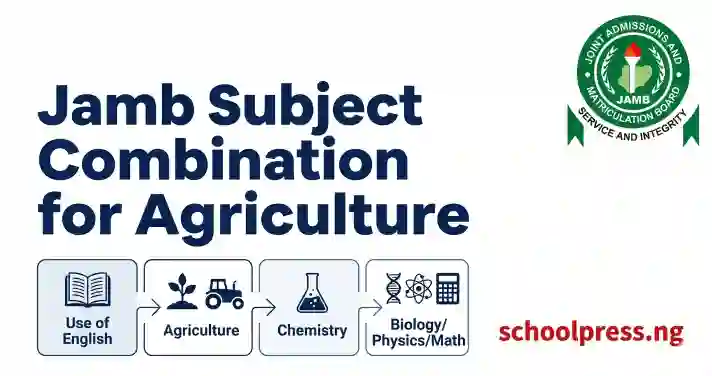
The Jamb subject combination for Agriculture determines your eligibility for admission into agricultural science programs across Nigerian universities. Choosing the right subjects during your UTME registration is the first step toward securing admission into this vital field. Getting this decision wrong can cost you an entire academic year.
Many students lose admission opportunities because they select incorrect subject combinations or fail to meet specific university requirements. Agriculture programs have standardized subject requirements, but variations exist across institutions. Understanding these requirements early helps you prepare adequately.
This guide covers everything you need to know about studying Agriculture in Nigeria. You will find detailed information on O’level requirements, UTME subject combinations, Direct Entry qualifications, universities offering the program, and career prospects in the field.
NOTE: This subject combination requirement also suitable for the following courses; Agricultural Extension & Rural Sociology, Agricultural Extension & Rural Development, Agricultural Extension Services, Agriculture and Development Extension
Real Also: Jamb Subject Combination for all courses
O’Level Results Requirements for Agriculture
Your O’level results form the foundation of your admission eligibility. Universities assess these results alongside your UTME scores to determine if you qualify for Agriculture programs. Most institutions require five credit passes in relevant subjects at one or two sittings.
A. O’Level Requirements for Agriculture
Agriculture programs require five credit passes in SSCE, NECO, NABTEB, or GCE at not more than two sittings. The mandatory subjects include English Language, Mathematics, Chemistry, and Biology or Agricultural Science. The fifth subject can be Physics or any other science subject.
Some universities accept Physics in place of Biology, while others maintain strict requirements for Biology or Agricultural Science. Federal universities typically enforce stricter O’level requirements compared to state and private institutions. Always verify the specific requirements of your preferred university.
B. How to Combine Two Sitting Results Strategically
Students who do not obtain all required credits in one sitting can combine results from two examinations. Ensure your core subjects appear in the better result sheet. If you scored C6 in Chemistry in your first sitting, retake it.
Register for subjects you failed or need to improve rather than repeating subjects where you already have credits. This approach saves money and time. Most universities accept any combination of WAEC, NECO, and NABTEB results taken at different times.
C. Common O’Level Mistakes That Kill JAMB Efforts
Many students register for wrong subject combinations or fail to prioritize core subjects. Substituting Biology with Geography or using only one sitting when you have deficiencies wastes your JAMB registration. Some candidates also present results from more than two sittings.
Another frequent mistake involves poor subject distribution across sittings. Having four credits in one sitting and one in another creates problems during verification. Aim to complete your O’level requirements in one sitting whenever possible.
Jamb Subject Combination for Agriculture
Your UTME subject combination must align with your O’level results and the requirements of your chosen universities. Agriculture has specific subject requirements that differ from other science programs. Getting these subjects right increases your chances of admission significantly.
A. UTME/Jamb Subjects Combination for Agriculture
The standard Jamb subject combination for Agriculture consists of Chemistry, Biology or Agricultural Science, Physics or Mathematics. You must include English Language as it is compulsory for all candidates. This combination applies to most Nigerian universities offering Agriculture.
Chemistry remains mandatory across all institutions because it forms the basis for understanding soil science, fertilizers, and plant nutrition. Biology or Agricultural Science provides foundational knowledge about living organisms and farming systems. Physics helps with understanding agricultural engineering concepts.
Some universities accept Mathematics in place of Physics, while others strictly require Physics. Always check the brochure of your preferred institutions to confirm their specific requirements before registering for UTME.
B. Minimum UTME/Jamb Score Requirements
1. Federal Universities: 180 to 200 (varies by institution). Top federal universities like Ahmadu Bello University and University of Ibadan typically require scores between 200 and 220 for competitive admission.
2. State Universities: 160 to 180. State universities generally maintain lower cut-off marks, with some accepting scores as low as 160 for Agriculture programs.
3. Private Universities: 140 to 160. Private institutions often have more flexible admission requirements, though reputable ones maintain standards comparable to state universities.
C. UTME/Jamb Subjects Special Consideration (Waiver) for Agriculture
Some universities accept two relevant science subjects plus Mathematics or English. University of Benin, University of Port Harcourt, and Delta State University occasionally offer waivers for candidates with exceptional O’level results. Federal University of Agriculture Abeokuta accepts candidates with strong Agricultural Science backgrounds.
Obafemi Awolowo University and University of Ilorin consider candidates who have Mathematics instead of Physics under special circumstances. Always contact the admissions office of your preferred university to confirm current waiver policies before assuming eligibility.
Direct Entry Requirements for Agriculture
Direct Entry provides an alternative admission pathway for candidates with advanced qualifications. This option allows you to enter university at 200 level, skipping the preliminary year. Direct Entry candidates must possess relevant qualifications beyond O’level certificates.
Who qualifies for Direct Entry? Candidates with A’level, NCE, OND, HND, or IJMB certificates in relevant subjects can apply. These qualifications must include science subjects related to Agriculture. Your certificate should come from recognized institutions.
Who should consider Direct Entry for Agriculture? Students who completed diploma programs in agricultural fields should explore this option. Those with strong backgrounds in biological sciences or related disciplines can benefit from Direct Entry admission. This pathway suits mature students returning to formal education.
A. Direct Entry Requirements and Qualifications for Agriculture
Universities accept two A’level passes in Chemistry and Biology or Agricultural Science. NCE with merit passes in Biology, Chemistry, and Agricultural Science qualifies candidates for Direct Entry. OND or HND in Agriculture, Animal Science, or related fields with lower credit also meets requirements.
IJMB or Cambridge A’level certificates must show strong performance in relevant science subjects. Some universities require minimum grades of C in both subjects. Federal institutions typically demand higher grades than state universities for Direct Entry admission.
B. O’level Direct Entry Requirements for Agriculture
Direct Entry candidates must still satisfy O’level requirements. Five credit passes including English Language, Mathematics, Chemistry, Biology or Agricultural Science, and Physics remain mandatory. These credits must come from not more than two sittings.
Your O’level deficiencies can disqualify you even with excellent advanced qualifications. Ensure you meet both the Direct Entry certificate requirements and the basic O’level standards. Some universities allow awaiting results for UTME but not Direct Entry.
C. Direct Entry Special Consideration (Waiver) for Agriculture
University of Nigeria Nsukka accepts HND holders with pass grades under special consideration. Federal University of Agriculture Makurdi considers candidates with NCE in science education. Ahmadu Bello University offers waivers for candidates with relevant professional certificates.
Ladoke Akintola University of Technology and Federal University Oye-Ekiti accept ND in Agricultural Technology with merit. Contact these institutions directly to understand their current waiver policies and application procedures for Direct Entry admission.
Universities Offering Agriculture
1. Federal Universities: Ahmadu Bello University Zaria, University of Ibadan, University of Nigeria Nsukka, Federal University of Agriculture Abeokuta, Federal University of Agriculture Makurdi, Michael Okpara University of Agriculture Umudike, University of Benin, University of Ilorin,
Obafemi Awolowo University, University of Port Harcourt, Federal University of Technology Minna, Federal University of Technology Owerri, Bayero University Kano, University of Calabar, University of Jos, University of Maiduguri,
Usmanu Danfodiyo University Sokoto, Federal University Dutse, Federal University Gashua, Federal University Kashere, Federal University Lafia, Federal University Otuoke, Federal University Oye-Ekiti, Federal University Wukari.
2. State Universities: Adamawa State University Mubi, Ambrose Alli University Ekpoma, Delta State University Abraka, Ebonyi State University Abakaliki, Ekiti State University Ado-Ekiti, Enugu State University of Science and Technology, Kogi State University Anyigba, Kwara State University Malete, Lagos State University,
Niger Delta University Wilberforce Island, Rivers State University, Tai Solarin University of Education, Nasarawa State University Keffi, Osun State University Osogbo, Ondo State University of Science and Technology, Taraba State University Jalingo, Yobe State University Damaturu, Kebbi State University of Science and Technology.
3. Private Universities: Adeleke University Ede, Bells University of Technology Ota, Bowen University Iwo, Caleb University Lagos, Crawford University Igbesa, Landmark University Omu-Aran, Madonna University Okija, Redeemer’s University Ede,
Wesley University Ondo, Achievers University Owo, Elizade University Ilara-Mokin, Evangel University Akaeze, Godfrey Okoye University Enugu, Joseph Ayo Babalola University Ikeji-Arakeji, Novena University Ogume, Paul University Awka, Renaissance University Enugu.
4. Polytechnic Institutions: Federal Polytechnic Ado-Ekiti, Federal Polytechnic Bauchi, Federal Polytechnic Bida, Federal Polytechnic Idah, Federal Polytechnic Ilaro, Federal Polytechnic Mubi, Federal Polytechnic Nasarawa, Federal Polytechnic Offa, Yaba College of Technology Lagos, Kaduna Polytechnic
Kano State Polytechnic, Lagos State Polytechnic Ikorodu, Moshood Abiola Polytechnic Abeokuta, Rufus Giwa Polytechnic Owo, Osun State Polytechnic Iree, Plateau State Polytechnic Barkin Ladi.
Career Prospects in Agriculture
1. Agricultural Economist: You analyze market trends, pricing structures, and economic policies affecting agricultural production. This role requires understanding both agricultural practices and economic principles. Organizations like CBN, agricultural banks, and policy research institutes employ agricultural economists regularly.
2. Farm Manager: You oversee daily operations on agricultural enterprises, including crop production, livestock management, and worker supervision. Private farms, government agricultural stations, and agribusiness companies need experienced farm managers. This position offers practical application of agricultural knowledge.
3. Agricultural Extension Officer: You educate farmers on improved agricultural practices, new technologies, and government policies. State and federal agricultural development programs employ extension officers across rural communities. This career combines fieldwork with community development initiatives.
4. Agronomist: You specialize in crop production, soil management, and plant breeding. Research institutes, seed companies, and large-scale farms hire agronomists to improve crop yields. This role involves both laboratory research and field trials.
5. Soil Scientist: You analyze soil composition, fertility, and conservation methods. Environmental agencies, agricultural research centers, and consulting firms employ soil scientists. Your work helps optimize land use and sustainable farming practices.
6. Agricultural Consultant: You provide expert advice to farmers, agribusinesses, and government agencies on production efficiency and profitability. This career offers independence and diverse project opportunities. Successful consultants build strong industry networks.
7. Quality Control Officer: You ensure agricultural products meet safety and quality standards before reaching consumers. Food processing companies, export firms, and regulatory agencies need quality control specialists. This role protects public health and business reputations.
8. Agribusiness Entrepreneur: You establish and manage agricultural ventures ranging from production to processing and marketing. Opportunities exist in poultry, fisheries, horticulture, and food processing. Entrepreneurship requires business acumen alongside agricultural expertise.
Frequently Asked Questions On Agriculture
1. Can I study Agriculture with C6 in Mathematics?
Most universities require a minimum of C6 in Mathematics for Agriculture admission. However, some institutions accept candidates with weaker Mathematics grades if other subjects are strong. Check your preferred university’s specific requirements before applying.
2. Is Physics compulsory for Agriculture in JAMB?
Physics is not universally compulsory. Many universities accept Mathematics as a substitute for Physics in the Jamb subject combination for Agriculture. However, Chemistry and Biology or Agricultural Science remain mandatory across all institutions.
3. What is the difference between Agriculture and Agricultural Economics?
Agriculture focuses broadly on crop and animal production, while Agricultural Economics specializes in the business and economic aspects of farming. Both programs share some foundational courses but diverge significantly in upper levels. Choose based on your career interests.
4. Can I combine WAEC and NECO results for Agriculture admission?
Yes, universities accept combinations of WAEC, NECO, and NABTEB results provided you meet the five credit requirement within two sittings. Ensure core subjects like Chemistry and Biology appear with strong grades in at least one result.
5. Which university has the lowest cut-off mark for Agriculture?
Private universities typically maintain the lowest cut-off marks, ranging from 140 to 160. Some state universities also accept scores around 160. However, actual admission often requires scores above the stated cut-off due to competition.
6. Do I need Agricultural Science in O’level to study Agriculture?
Agricultural Science is not mandatory if you have Biology. Most universities accept either Biology or Agricultural Science as fulfilling the O’level requirement. However, having Agricultural Science demonstrates relevant background knowledge.
7. Can HND Agriculture holders gain Direct Entry admission?
Yes, HND holders in Agriculture with minimum Lower Credit can apply for Direct Entry admission. Some universities accept Pass grades under special consideration. You must still meet O’level requirements regardless of your HND qualification.
8. What is the duration of Agriculture programs in Nigerian universities?
UTME candidates complete Agriculture in four years, while Direct Entry students finish in three years. Some universities offer five-year programs combining Agriculture with Education. Duration depends on your entry point and program structure.
9. Is Agriculture a marketable course in Nigeria?
Agriculture remains highly marketable due to Nigeria’s focus on food security and economic diversification. Graduates find opportunities in government agencies, agribusinesses, research institutes, and entrepreneurship. The agricultural sector continues experiencing significant growth and investment.
10. Can I switch from Agriculture to Medicine after admission?
Switching from Agriculture to Medicine after admission is extremely difficult and rarely permitted. Medicine has specific entry requirements including higher JAMB scores. If you want to study Medicine, apply for it directly rather than using Agriculture as a backdoor.
Source: Jamb Brochure