
2026 Jamb Subject Combination for Agricultural Engineering
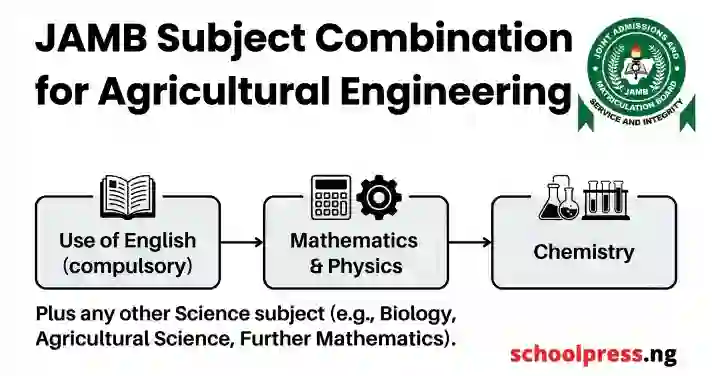
Jamb subject combination for Agricultural Engineering determines your eligibility for admission into this specialized engineering program. Many students struggle with choosing the right subjects or meeting the requirements. This guide breaks down everything you need to know about gaining admission into Agricultural Engineering programs across Nigerian universities.
Getting the subject combination wrong can cost you an entire academic year. The requirements vary slightly between institutions, but the core subjects remain consistent. Understanding these requirements early helps you prepare better and avoid common mistakes that delay admission.
Agricultural Engineering combines engineering principles with agricultural science to solve farming and food production challenges. The program requires strong foundations in mathematics, physics, and chemistry. Students who meet the requirements go on to design irrigation systems, develop farm machinery, and create solutions for food processing and storage.
This article covers O’level requirements, Jamb subject combinations, Direct Entry pathways, universities offering the program, career prospects, and frequently asked questions about Agricultural Engineering admission requirements.
Real Also: Jamb Subject Combination for all courses
O’Level Results Requirements for Agricultural Engineering
Your O’level results form the foundation of your admission eligibility. Most universities require five credit passes in relevant subjects at not more than two sittings. The specific subject requirements include Mathematics, English Language, Physics, Chemistry, and either Biology or Agricultural Science.
A. O’Level Requirements for Agricultural Engineering
You need five credit passes in SSCE, NECO, or GCE. Mathematics and English Language are compulsory for all applicants. Physics and Chemistry are essential science subjects that you must pass. The fifth subject should be Biology or Agricultural Science, though some universities accept either one.
Some institutions accept Technical Drawing as an alternative to Biology or Agricultural Science. Check your preferred university’s specific requirements before making final subject choices. The grades must be C6 or better in the West African grading system.
B. How to Combine Two Sitting Results Strategically
You can combine results from two different examination sittings to meet the five credit requirement. The key is ensuring you do not repeat any subject across both sittings. If you failed Mathematics in your first sitting, retake it in the second sitting while attempting other subjects you need.
Focus on getting Mathematics, English, Physics, and Chemistry in one sitting if possible. These core subjects carry more weight in admission decisions. Use the second sitting to strengthen your profile with Biology or Agricultural Science if you missed them initially.
C. Common O’Level Mistakes That Kill JAMB Efforts
Many students skip Agricultural Science thinking Biology alone is sufficient. Some universities specifically require Agricultural Science, not Biology. Always verify what your target institution accepts. Another mistake is poor performance in Mathematics, which is non-negotiable for engineering programs.
Repeating subjects across two sittings disqualifies your application at many universities. Some students also submit results after the application deadline. Get your results ready before the admission process begins to avoid last-minute complications that could derail your plans.
Jamb Subject Combination for Agricultural Engineering
Your UTME subject choices must align with the O’level requirements and the university’s admission policy. The right combination gives you access to multiple universities and increases your chances of admission. Wrong subject choices automatically disqualify you regardless of your score.
A. UTME/Jamb Subjects Combination for Agricultural Engineering
The standard Jamb subject combination for Agricultural Engineering consists of Mathematics, Physics, Chemistry, and either Biology or Agricultural Science. Mathematics is compulsory and forms the foundation for engineering calculations. Physics helps you understand mechanical principles and energy systems used in agricultural machinery.
Chemistry is essential for understanding soil science, fertilizers, and crop nutrition. The fourth subject can be Biology or Agricultural Science, depending on what the university accepts. Some universities specifically state their preference, so check the institution’s brochure before registration.
B. Minimum UTME/Jamb Score Requirements
- Federal Universities: 180 to 200 points, though highly competitive schools like the University of Ibadan or Ahmadu Bello University may require 220 or higher for realistic chances.
- State Universities: 160 to 180 points, with some accepting lower scores depending on the number of applicants and available spaces for the academic session.
- Private Universities: 140 to 160 points, as they often have less competition and more flexible admission policies compared to government-owned institutions.
C. UTME/Jamb Subjects Special Consideration (Waiver) for Agricultural Engineering
Some universities grant waivers for specific subject requirements under certain conditions. The University of Ilorin accepts candidates who have Biology instead of Agricultural Science. Federal University of Technology, Minna, also shows flexibility with the fourth subject choice.
The University of Nigeria, Nsukka, occasionally considers strong Mathematics and Physics candidates even when the fourth subject is not perfectly aligned.
Covenant University and Landmark University have institutional policies that may accommodate exceptional candidates. Always contact the admissions office to confirm current waiver policies before assuming you qualify.
Direct Entry Requirements for Agricultural Engineering
Direct Entry allows you to enter Agricultural Engineering at 200 level instead of starting from 100 level. This option is available for candidates with advanced qualifications beyond O’level. Direct Entry saves you one year and is ideal for diploma holders or those with A’level certificates.
Who qualifies for Direct Entry? Candidates with National Diploma, NCE, IJMB, or A’level certificates in relevant fields can apply. Your previous qualification must be in engineering, science, or agricultural technology. The grades and subjects studied in your diploma or A’level must align with Agricultural Engineering requirements.
A. Direct Entry Requirements and Qualifications for Agricultural Engineering
You need at least Upper Credit in National Diploma from recognized polytechnics. The diploma must be in Agricultural Engineering, Mechanical Engineering, or related engineering fields. For A’level candidates, you need two passes at principal level in Physics, Chemistry, and Mathematics.
IJMB candidates should have passes in Physics, Chemistry, and Mathematics. NCE holders need merit passes in relevant science subjects. Some universities accept HND with Lower Credit, but Upper Credit significantly improves your chances of acceptance into competitive programs.
B. O’level Direct Entry Requirements for Agricultural Engineering
Even with advanced qualifications, you still need five O’level credits. The subjects remain Mathematics, English Language, Physics, Chemistry, and Biology or Agricultural Science. These credits must be obtained at not more than two sittings.
Direct Entry does not exempt you from O’level requirements. Your diploma or A’level certificate supplements, rather than replaces, your O’level results. Ensure all five credits are in place before submitting your Direct Entry application.
C. Direct Entry Special Consideration (Waiver) for Agricultural Engineering
Federal University of Technology, Akure, accepts HND holders with Lower Credit in exceptional cases. The University of Benin considers work experience in agricultural sectors as additional qualification. Obafemi Awolowo University reviews candidates with strong industry certifications.
Ladoke Akintola University of Technology may waive certain requirements for candidates with published research in agricultural technology. Rivers State University occasionally grants waivers to indigenes with relevant diplomas. Contact the institution directly to understand their current waiver policy and required documentation.
Universities Offering Agricultural Engineering
1. Federal Universities:
University of Ibadan, Ahmadu Bello University Zaria, University of Nigeria Nsukka, Federal University of Technology Akure, Federal University of Technology Minna, Federal University of Technology Owerri, University of Ilorin, University of Benin, Obafemi Awolowo University Ile-Ife, University of Uyo, Federal University of Agriculture Abeokuta, Federal University of Agriculture Makurdi, University of Port Harcourt, Bayero University Kano, University of Maiduguri, Abubakar Tafawa Balewa University Bauchi, Michael Okpara University of Agriculture Umudike, Modibbo Adama University of Technology Yola, Federal University Oye-Ekiti, Federal University Wukari.
2. State Universities:
Ladoke Akintola University of Technology Ogbomoso, Rivers State University Port Harcourt, Imo State University Owerri, Kano University of Science and Technology Wudil, Ekiti State University Ado-Ekiti, Osun State University Osogbo, Nasarawa State University Keffi, Enugu State University of Science and Technology, Kebbi State University of Science and Technology Aliero.
3. Private Universities:
Covenant University Ota, Landmark University Omu-Aran, Bells University of Technology Ota, Benson Idahosa University Benin City, Madonna University Okija, Caritas University Enugu, Augustine University Ilara, Samuel Adegboyega University Ogwa.
4. Polytechnic Institutions:
Federal Polytechnic Ado-Ekiti, Federal Polytechnic Bauchi, Federal Polytechnic Bida, Kaduna Polytechnic, Yaba College of Technology Lagos, Federal Polytechnic Idah, Federal Polytechnic Nekede, Moshood Abiola Polytechnic Abeokuta, Lagos State Polytechnic Ikorodu, Institute of Management and Technology Enugu, Rufus Giwa Polytechnic Owo, Federal Polytechnic Offa, Delta State Polytechnic Ozoro, Akanu Ibiam Federal Polytechnic Unwana.
Career Prospects in Agricultural Engineering
1. Farm Mechanization Specialist: You design and maintain agricultural machinery like tractors, harvesters, and planters. This role involves working with farmers to improve efficiency through mechanization. The job requires understanding both engineering principles and farming operations to recommend appropriate equipment for different farm sizes.
2. Irrigation and Drainage Engineer: You plan and implement water management systems for farms. This includes designing irrigation channels, installing sprinkler systems, and creating drainage solutions. The role is crucial in areas facing water scarcity or flooding challenges affecting crop production.
3. Food Processing Engineer: You work in food manufacturing companies to design processing equipment and improve production lines. This includes developing machinery for milling, packaging, and preserving agricultural products. Your work ensures food safety standards while maximizing production efficiency.
4. Agricultural Structures Designer: You design farm buildings, storage facilities, and livestock housing. This involves creating structures that protect crops, maintain optimal storage conditions, and provide comfortable animal housing. Your designs must consider climate, ventilation, and material costs.
5. Renewable Energy Consultant: You develop biogas systems, solar power solutions, and other renewable energy applications for farms. This emerging field combines agricultural waste management with energy production. Your work helps farms reduce costs and become environmentally sustainable.
6. Soil and Water Conservation Engineer: You implement erosion control measures and land reclamation projects. This role involves studying terrain, designing terraces, and creating watershed management plans. Your work protects farmland from degradation and improves long-term agricultural productivity.
Frequently Asked Questions On Agricultural Engineering
1. Can I study Agricultural Engineering with Biology instead of Agricultural Science?
Yes, most universities accept Biology as an alternative to Agricultural Science. However, some institutions specifically require Agricultural Science, so verify with your chosen university. Having both subjects strengthens your application and gives you more options.
2. What is the difference between Agricultural Engineering and Agricultural Economics?
Agricultural Engineering focuses on designing machines, systems, and structures for farming. Agricultural Economics deals with farm management, marketing, and financial aspects. Engineering requires strong Mathematics and Physics skills, while Economics requires different competencies.
3. Is Agricultural Engineering the same as Mechanical Engineering?
No, they are different programs. Agricultural Engineering specializes in applying engineering to farming and food production. Mechanical Engineering covers broader industrial applications. However, some principles overlap, and Agricultural Engineering graduates can work in general engineering roles.
4. Which subject should I choose as my fourth JAMB subject between Biology and Agricultural Science?
Choose based on what you studied in secondary school and performed better in. Check your target universities to see if they have preferences. If both are acceptable, pick the one where you can score higher marks.
5. Can I change from Agricultural Engineering to another engineering course after admission?
Most universities allow internal transfers after the first year if you meet certain requirements. However, this is not guaranteed and depends on available spaces. It is better to choose correctly from the beginning.
6. What is the duration of Agricultural Engineering program in Nigeria?
The program typically runs for five years for UTME candidates. Direct Entry candidates spend four years. Some universities require students to complete industrial training, which may extend the duration.
7. Do I need Further Mathematics for Agricultural Engineering?
Further Mathematics is not compulsory for admission into Agricultural Engineering. However, having it demonstrates strong mathematical ability. The core requirement is credit in Mathematics at O’level and choosing Mathematics for JAMB.
8. Can I study Agricultural Engineering without Chemistry?
No, Chemistry is a compulsory subject for Agricultural Engineering. You need it at both O’level and JAMB. Chemistry is essential for understanding soil science, crop nutrition, and materials used in engineering applications.
9. What is the cut-off mark for Agricultural Engineering in federal universities?
Cut-off marks range from 180 to 220 depending on the institution. Highly competitive universities like University of Ibadan require higher scores. State and private universities generally have lower cut-off marks.
10. Are there job opportunities for Agricultural Engineering graduates in Nigeria?
Yes, there are opportunities in agricultural companies, government agencies, research institutes, and food processing industries. You can also work as a consultant or start your own agricultural mechanization business. The demand for agricultural engineers is growing as Nigeria focuses on food security.
Source: Jamb Brochure