
2026 JAMB Subject Combination for Agricultural Education
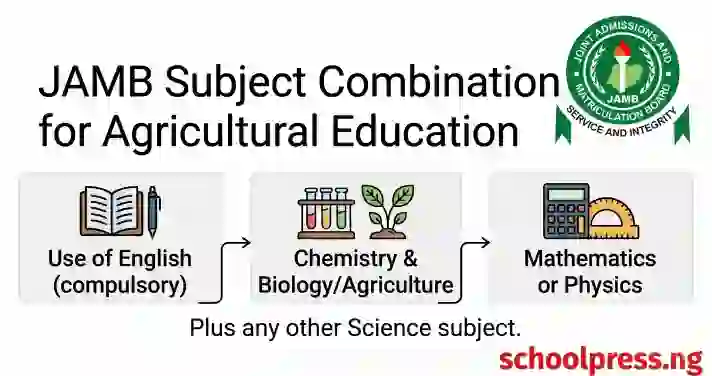
JAMB subject combination for Agricultural Education is essential knowledge for prospective students planning to study this field. Many students miss admission opportunities because they choose wrong subject combinations or fail to meet basic requirements.
This guide provides clear information about what you need to gain admission into Agricultural Education programs across Nigerian universities.
Understanding the right subjects and requirements saves time and prevents costly mistakes. Agricultural Education prepares students for careers in teaching agriculture, agricultural extension services, and educational program development. The course combines agricultural science knowledge with teaching methods and educational psychology.
This article covers O’Level requirements for Agricultural Education, the exact JAMB subject combination you need, Direct Entry qualifications, universities offering the program, career prospects, and answers to common questions students ask about admission requirements.
Real Also: Jamb Subject Combination for all courses
O’Level Results Requirements for Agricultural Education
Your O’Level results form the foundation of your admission application. Most universities require five credit passes in relevant subjects at not more than two sittings. Getting the right subject combination at O’Level determines whether you qualify to write JAMB for Agricultural Education.
A. O’Level Requirements for Agricultural Education
You need five credit passes including English Language, Mathematics, Chemistry, Biology or Agricultural Science, and one other science subject. Some universities accept Physics or Geography as the fifth subject.
The credits must be obtained at WAEC, NECO, or NABTEB examinations. Both SSCE and GCE results are acceptable for admission purposes.
B. How to Combine Two Sitting Results Strategically
You can combine results from two different examination sittings to meet the five credit requirement. Plan your second sitting to target only the subjects you failed or did not take earlier.
Focus on getting credits in the core subjects like English, Mathematics, and the science subjects first. Avoid repeating subjects you already have credits in unless you need better grades for competitive advantage.
C. Common O’Level Mistakes That Kill JAMB Efforts
Many students register for wrong subject combinations that do not meet university requirements. Some take Commerce or Accounting instead of required science subjects. Others ignore Mathematics or English Language, thinking they can make up for it later.
Taking more than two sittings disqualifies you in most universities. Always verify the exact O’Level requirements for Agricultural Education before registering for WAEC or NECO examinations.
JAMB Subject Combination for Agricultural Education
Your UTME subject combination must align with the course requirements. Wrong subject choices lead to automatic disqualification regardless of how high you score. Agricultural Education falls under education and agricultural science programs, so your subjects must reflect both areas.
A. UTME/JAMB Subjects Combination for Agricultural Education
The required JAMB subjects are Chemistry, Biology or Agricultural Science, and Physics or Mathematics. These three subjects combine with Use of English, which is compulsory for all candidates.
Some universities prefer Biology and Mathematics as the ideal combination. Check your chosen university’s brochure before making final subject selections to avoid mistakes.
B. Minimum UTME/JAMB Score Requirements
Federal Universities: The score ranges from 180 to 200 depending on the institution and competition level. Universities like University of Nigeria Nsukka and Ahmadu Bello University often require higher scores due to demand.
State Universities: Most state universities accept scores between 170 and 190 for Agricultural Education programs. The cutoff varies based on the number of applicants and available spaces.
Private Universities: Private institutions typically set their cutoff between 160 and 180, though some maintain higher standards to ensure quality admission.
C. UTME/JAMB Subjects Special Consideration (Waiver) for Agricultural Education
Some universities grant waivers for specific subjects under certain conditions. University of Ibadan accepts Geography in place of Physics for some applicants. Federal University of Agriculture Abeokuta sometimes considers candidates with strong Agricultural Science backgrounds even without Chemistry.
Obafemi Awolowo University occasionally grants waivers for Mathematics if the candidate has exceptional grades in other science subjects. Always contact the admission office directly to confirm current waiver policies before applying.
Direct Entry Requirements for Agricultural Education
Direct Entry allows candidates with advanced qualifications to enter university at 200 level instead of 100 level. This route is designed for candidates holding recognized diplomas, NCE, or A-Level certificates in relevant fields. Direct Entry admission reduces your study time and recognizes previous academic achievements.
Who should consider Direct Entry for Agricultural Education? Candidates with NCE in Agricultural Science or related education programs qualify. Those holding National Diploma in Agriculture from accredited polytechnics can also apply. A-Level certificate holders with relevant subject passes should explore this option.
A. Direct Entry Requirements and Qualifications for Agricultural Education
You need NCE with merit or credit passes in Agricultural Science and two other relevant subjects. National Diploma holders require lower credit or upper credit in Agriculture or related programs.
A-Level candidates must have two principal passes in Chemistry and Biology or Agricultural Science. Some universities accept HND holders but may require additional bridging courses.
B. O’Level Direct Entry Requirements for Agricultural Education
Direct Entry candidates must still meet the basic O’Level requirements of five credits including English Language and Mathematics.
The credits must include Chemistry, Biology or Agricultural Science, and one other science subject. These O’Level requirements cannot be waived even for candidates with higher qualifications like NCE or ND.
C. Direct Entry Special Consideration (Waiver) for Agricultural Education
University of Ilorin accepts NCE graduates from affiliated colleges of education with slightly relaxed score requirements. Federal College of Education Zaria graduates receive special consideration at Ahmadu Bello University.
University of Agriculture Makurdi offers waivers for candidates with distinction grades in National Diploma programs. Contact the admission office of your preferred university to understand their specific waiver policies.
Universities Offering Agricultural Education
Multiple institutions across Nigeria offer accredited Agricultural Education programs. These universities provide quality training that prepares graduates for careers in agricultural teaching and extension services.
Federal Universities:
- University of Nigeria, Nsukka
- Ahmadu Bello University, Zaria
- University of Ilorin, Ilorin
- Federal University of Agriculture, Abeokuta
- University of Maiduguri, Maiduguri
- Modibbo Adama University, Yola
State Universities:
- Lagos State University, Lagos
- Ebonyi State University, Abakaliki
- Kogi State University, Anyigba
- Tai Solarin University of Education, Ijebu-Ode
- Enugu State University of Science and Technology, Enugu
Private Universities:
- Bowen University, Iwo
- Landmark University, Omu-Aran
- Bells University of Technology, Otta
Colleges of Education:
- Federal College of Education, Zaria
- Federal College of Education, Abeokuta
- Federal College of Education (Technical), Omoku
- Adeyemi College of Education, Ondo
- College of Education, Ikere-Ekiti
- Nwafor Orizu College of Education, Nsugbe
- Federal College of Education, Katsina
- Alvan Ikoku Federal College of Education, Owerri
Career Prospects in Agricultural Education
Agricultural Education graduates have diverse career opportunities in education, agriculture, and development sectors. The qualification opens doors to both teaching and non-teaching positions.
1. Agricultural Science Teacher: You can teach agricultural science in secondary schools across Nigeria. The demand for qualified agriculture teachers remains high in both public and private schools. Teachers earn regular salaries with opportunities for promotion to senior positions.
2. Extension Officer: Work with government agencies or NGOs to train farmers on modern agricultural practices. Extension officers bridge the gap between research findings and practical farm applications. This role involves field work and direct interaction with farming communities.
3. Curriculum Developer: Design agricultural education programs for schools, training institutes, and agricultural organizations. Curriculum developers work with education ministries and private education companies. This position requires understanding of both agriculture and teaching methods.
4. Agricultural Training Coordinator: Manage training programs for farmers, agribusiness operators, and agricultural workers. Many agricultural companies and government agencies employ training coordinators. The role combines administrative work with practical agricultural knowledge.
5. Educational Consultant: Provide expert advice to schools, government bodies, and organizations on agricultural education matters. Consultants work independently or with consulting firms. This career path offers flexibility and higher earning potential with experience.
Frequently Asked Questions On Agricultural Education
1. Can I study Agricultural Education without Chemistry in JAMB?
No, Chemistry is a compulsory subject for Agricultural Education in most universities. Some institutions may grant waivers in exceptional cases, but Chemistry remains the standard requirement. Contact your preferred university to confirm their specific waiver policies before making assumptions.
2. What is the difference between Agricultural Education and Agricultural Science?
Agricultural Education focuses on teaching agriculture and training others in agricultural practices. Agricultural Science emphasizes the scientific aspects of crop production, animal husbandry, and agricultural research. Agricultural Education graduates become teachers while Agricultural Science graduates often work as agronomists or researchers.
3. Can I teach with an Agricultural Education degree?
Yes, Agricultural Education qualifies you to teach agricultural science in secondary schools. The program includes education courses and teaching practice that prepare you for classroom instruction. You receive certification from the Teachers Registration Council of Nigeria upon graduation.
4. Do I need teaching experience before applying for Agricultural Education?
No, universities do not require teaching experience for admission into Agricultural Education programs. The course includes practical teaching sessions and student teaching assignments during your studies. Fresh school leavers can apply directly after secondary school.
5. Which JAMB subject combination is best for Agricultural Education?
The ideal combination is Use of English, Chemistry, Biology, and Mathematics. This combination meets requirements for most universities offering Agricultural Education. Some universities accept Agricultural Science in place of Biology or Physics in place of Mathematics.
6. Can HND Agriculture holders apply for Direct Entry into Agricultural Education?
Yes, HND holders in Agriculture can apply through Direct Entry. However, some universities require additional bridging courses due to differences between technical and education programs. Verify with your chosen university about their specific requirements for HND holders.
7. What is the minimum O’Level grade acceptable for Agricultural Education?
You need credit passes in all five required subjects. A credit is typically grade C6 and above in WAEC or grade 5 and above in the new WAEC grading system. Passes or lower grades do not meet admission requirements.
8. Can I switch from Agricultural Education to Agricultural Science after admission?
Switching between programs after admission is possible but not guaranteed. You must apply for course change through your university’s academic office. Approval depends on available space in the desired program and your academic performance.
9. How many years does Agricultural Education take to complete?
The program takes four years for UTME candidates and three years for Direct Entry candidates. Some universities operate a five-year program that includes an additional year for professional teaching certification. Part-time programs may take longer to complete.
10. Are there scholarship opportunities for Agricultural Education students?
Yes, various organizations offer scholarships to Agricultural Education students. Government agencies like the Federal Ministry of Agriculture provide bursaries. Private agricultural companies and international development organizations also sponsor qualified students. Check with your university’s scholarship office for available opportunities.
Source: Jamb Brochure